 Save
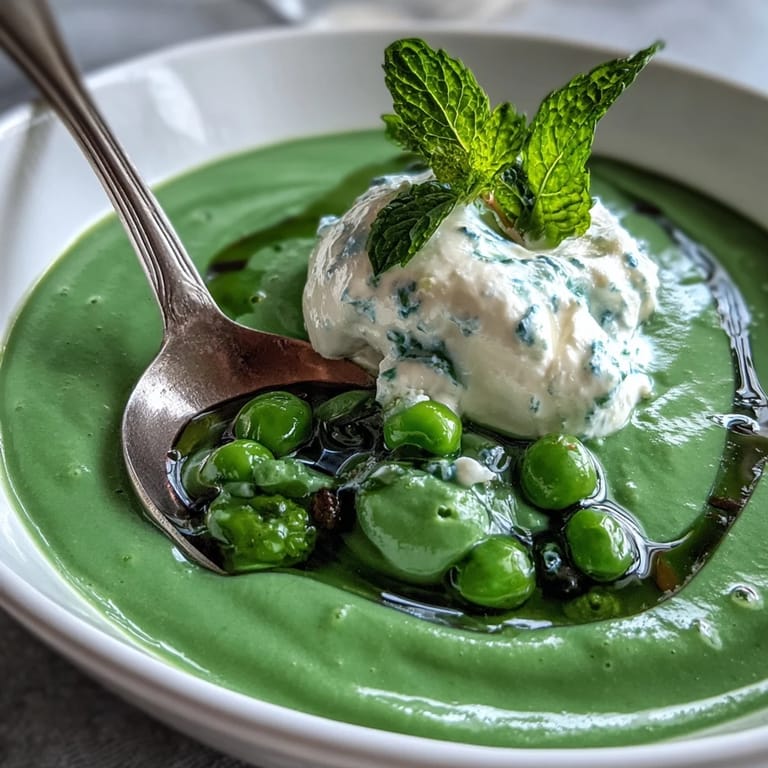
Save The first time I made this spring pea soup, there was a moment when the aroma of peas and onion melting together made me pause in the kitchen—it smelled unbelievably green, like opening a window into a sun-warmed garden after rain. Whipping up the ricotta felt luxurious, but honestly, I ended up giggling at the flecks of lemon zest clinging to my whisk. The mint oil, vivid as emeralds, looked so pretty drizzled that I almost forgot to taste it. There was something cheerful and bright about assembling all those parts, a satisfying way to celebrate spring’s first proper peas. It all came together with a kind of fresh simplicity that made the day feel lighter.
Once, I brought this soup to my neighbor’s backyard potluck—someone across the table took one bite and just grinned, saying it tasted exactly like the color green. That made sharing it even sweeter, and now every spring I wait for the first peas as an excuse to make it again.
Ingredients
- Olive oil: Using good olive oil brings out the delicate peas’ flavor—don’t skip the drizzle at the end if you love richness.
- Yellow onion: Finely chopped onions melt sweetly into the soup, providing a mellow base; sauté on medium so they never burn.
- Garlic: Mince fresh garlic for a gentle savoriness—you’ll know it’s ready when just fragrant, not browned.
- Sweet peas: Fresh or frozen work; just be sure to simmer until truly tender for effortless blending.
- Vegetable broth: A light broth keeps the soup fresh (avoid anything too salty or it overpowers the peas).
- Potato: Diced small for speedy softening—potato gives the soup that velvety body everyone loves.
- Sea salt & black pepper: Season in layers, tasting along the way so the peas really shine through.
- Ricotta cheese: Full-fat, if possible, whips best and makes the topping taste lush.
- Heavy cream: Just a splash loosens the ricotta, making it cloud-like and luxurious.
- Lemon zest: Brightens everything—tip: zest carefully, leaving the bitter white pith behind.
- Fresh mint leaves: This is where the soup gets its aromatic lift—fresh is essential for the mint oil’s vibrancy.
- Crusty bread: Not required, but perfect for mopping up every last streak of green.
Tired of Takeout? 🥡
Get 10 meals you can make faster than delivery arrives. Seriously.
One email. No spam. Unsubscribe anytime.
Instructions
- Start with the sizzle:
- Pour the olive oil into your saucepan and, as soon as the onions hit the heat, listen for that soft hiss – stir until they’re meltingly sweet but not brown. After a minute add the garlic; the kitchen will start smelling cozy and inviting.
- Simmer the garden:
- Tip in the peas and diced potato with salt and pepper, adding the broth and bringing everything to a cheerful bubble; let it simmer uncovered until the veggies yield easily to a fork.
- Puree to silk:
- Once everything’s tender, blend until the color turns vivid and the texture is as smooth as you desire—sample a spoonful and tweak salt and pepper to your liking.
- Whip up the ricotta:
- Combine ricotta, cream, zest, and a pinch of salt in a bowl and whisk or beat until it’s billowy and airy, with flecks of lemon shining through; stash it in the fridge while you finish the soup.
- Blitz the mint oil:
- Quickly blanch mint leaves before blending with olive oil and salt; the result should be shockingly green and grassy, perfect strained or as-is.
- Assemble and serve:
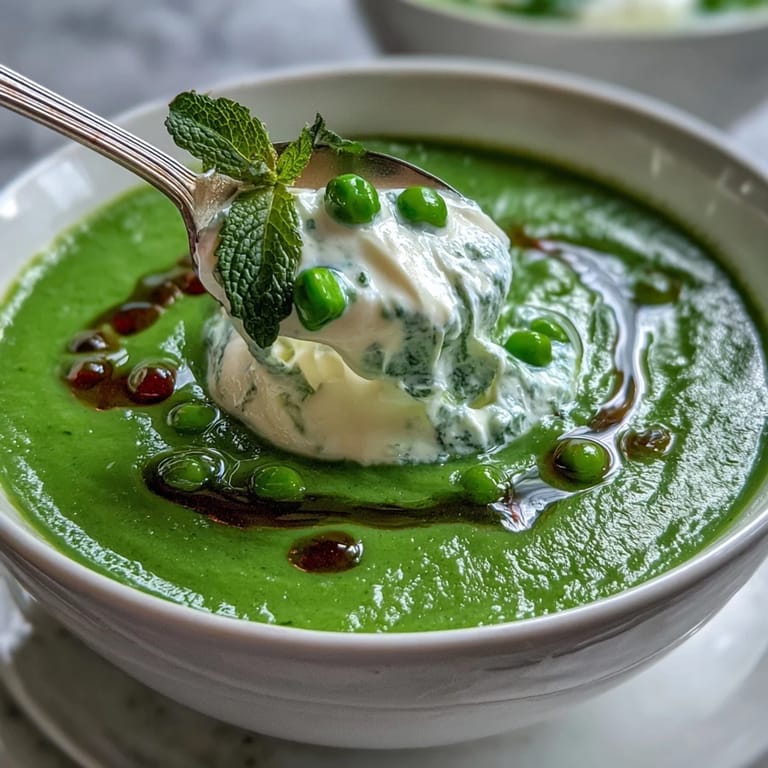
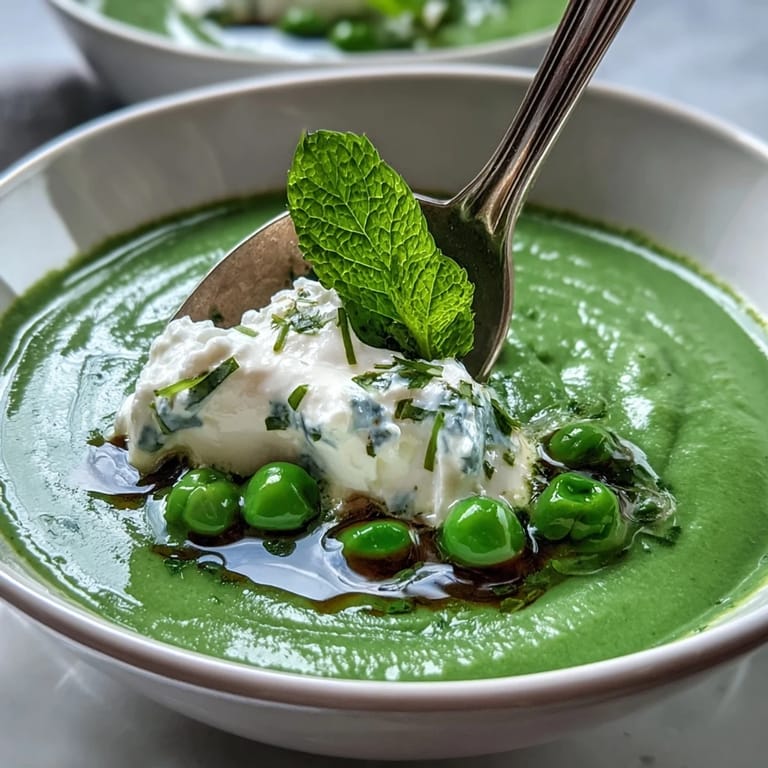
- Ladle the soup into bowls, swoop a generous spoonful of ricotta on top, then artistically drizzle with mint oil; garnish with extra peas and mint, and pass some fresh crusty bread at the table.
 Save
Save Last spring, when my sister visited, we sat with bowls of this soup on our laps watching the rain outside—it became one of those meals that made the day seem suddenly celebratory, even though it was just lunch at home.
How to Get the Brightest Green Soup
The color is half the fun of spring pea soup; I realized quickly that blending while the veggies are piping hot helps lock in that vibrant green. I never cover the pot after the peas go in, and serving straight away seems to capture all their fresh energy.
Ways to Adjust for Every Season
If you can’t find fresh peas, frozen are a truly reliable stand-in—I’ve even made this soup from pea shoots and baby spinach for a greener twist. When summer is especially warm, try serving it chilled for a picnic starter.
Making It Your Own: Little Flourishes
Sometimes I add a handful of blanched asparagus or toss in a few extra fresh herbs for a new accent, especially if friends are coming by and I want to impress. Playing with citrus zest (lime or orange) can be subtle but fun—just don’t skip the mint oil, as that’s the soul of this bowl.
- Use a microplane for fluffier lemon zest.
- Strain mint oil if you want a perfectly smooth drizzle.
- Taste as you go; pea sweetness varies batch to batch.
 Save
Save This soup feels best shared, but I have to admit, leftovers are even brighter the next day. Let every bowl remind you how joyful simple things can be.
Questions & Answers
- → Can I use frozen peas instead of fresh?
Yes. Frozen sweet peas work well and often give excellent sweetness. Add them directly to the pot and simmer until tender; no need to thaw. Adjust seasoning after blending.
- → How do I make the whipped ricotta lighter?
Beat ricotta with a tablespoon of cream (or olive oil for a lighter finish) and lemon zest until airy. A hand mixer or food processor creates a smoother, lighter texture; chill briefly before spooning on the soup.
- → How can I keep the mint oil bright green?
Blanch the mint in boiling water for 8–10 seconds then shock in ice water before blitzing with olive oil. Blend quickly and strain if desired; store chilled in an airtight container and use within a few days.
- → What are good vegan substitutions?
Swap ricotta for a plant-based ricotta or a silken tofu blended with a little coconut cream and lemon zest. Use a neutral vegetable stock and ensure any bread served is vegan if included.
- → Can the soup be served chilled?
Yes. Chill the soup thoroughly and adjust seasoning just before serving. Top with chilled whipped ricotta and mint oil for a refreshing cold starter on warm days.
- → How should I reheat leftovers without losing color or flavor?
Gently warm over low heat without boiling to preserve the pea color. If it thickens, add a splash of vegetable stock. Add fresh drizzle of mint oil and a spoonful of whipped ricotta after reheating.