 Save
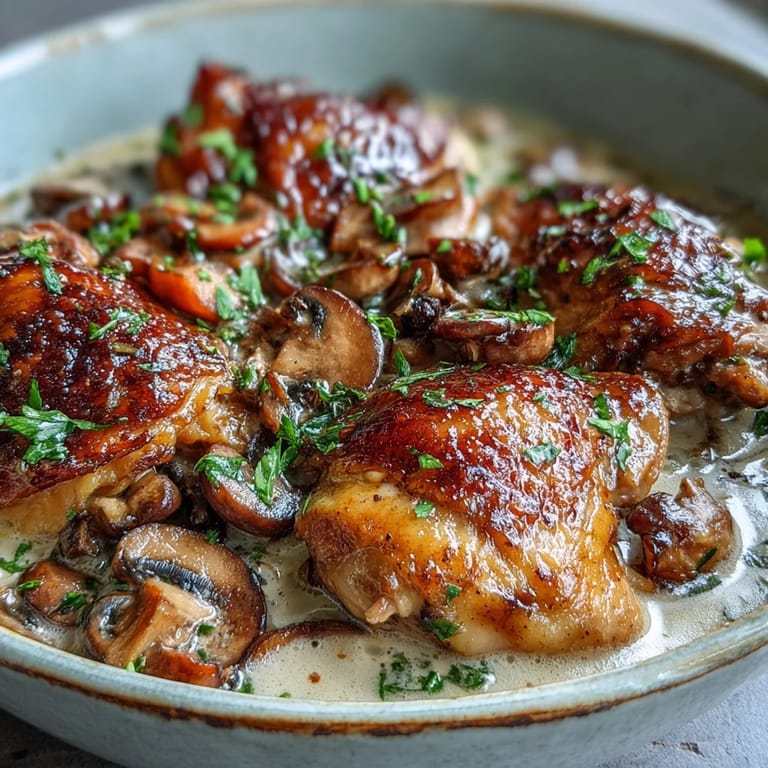
Save My neighbor brought me a bottle of rosé she didn't want, and I stood in my kitchen wondering what on earth to do with it besides drink it on a patio. I'd braised chicken in red wine dozens of times, but rosé felt too delicate, almost too pretty to cook with. Then I thought about how cream loves lighter wines, how mushrooms soak up whatever you give them, and I just went for it. The pot simmered away, filling the apartment with this soft, floral richness I'd never smelled before. When I tasted it, I realized I'd stumbled onto something that felt like spring in a bowl.
I made this for a small dinner party on a whim, plating it over buttery fingerling potatoes with a handful of parsley scattered on top. My friend Claire, who never stops talking, went completely quiet after her first bite. She looked up at me with wide eyes and said, is this actually coq au vin, because it tastes like a completely different dish. That's when I knew the rosé wasn't just a substitute, it was the whole point. The conversation that night revolved around that pot, and I felt ridiculously proud of a recipe I'd barely planned.
Ingredients
- Bone-in, skin-on chicken pieces: Thighs and drumsticks stay juicy and flavorful during the long braise, and the skin crisps up beautifully when you brown them first.
- Dry rosé wine: This is the soul of the dish, so use something you'd actually enjoy drinking, not cooking wine from the back of the pantry.
- Heavy cream: It mellows the wine's acidity and gives the sauce that signature silky finish, turning it into something luscious.
- Cremini or button mushrooms: They absorb all the winey, creamy goodness and add an earthy sweetness that balances everything.
- Carrots and leek: These vegetables build a gentle, aromatic base that doesn't overpower the delicate rosé.
- Garlic and tomato paste: Just enough to deepen the flavor without making it heavy or too tomatoey.
- Bay leaf, thyme, and rosemary: Classic French herbs that make your kitchen smell like a bistro in Provence.
- Olive oil: For browning the chicken and building those crispy, flavorful bits on the bottom of the pot.
- All-purpose flour: Optional, but it helps thicken the sauce into something that clings to every piece of chicken.
- Fresh parsley: A bright, grassy finish that cuts through the richness right before serving.
Tired of Takeout? 🥡
Get 10 meals you can make faster than delivery arrives. Seriously.
One email. No spam. Unsubscribe anytime.
Instructions
- Season and prep the chicken:
- Pat each piece completely dry with paper towels so the skin browns instead of steams. Season generously with salt and pepper, more than you think you need.
- Brown the chicken in batches:
- Heat olive oil until it shimmers, then lay the chicken skin-side down without crowding the pot. Let it sizzle undisturbed for about 5 minutes until the skin turns golden and releases easily.
- Sauté the aromatics:
- In the same pot with all those lovely browned bits, add onions, carrots, and leek, stirring until they soften and start to smell sweet. Toss in the mushrooms and let them cook down until they release their moisture.
- Build the flavor base:
- Stir in the garlic and let it bloom for a minute, then add tomato paste and cook it until it darkens slightly and smells almost caramelized.
- Thicken with flour:
- If you want a slightly thicker sauce, sprinkle the flour over the vegetables and stir it in until everything is lightly coated.
- Deglaze with rosé:
- Pour in the wine and scrape up all the stuck-on bits from the bottom of the pot with a wooden spoon. Those bits are pure flavor.
- Braise the chicken:
- Nestle the browned chicken back into the pot along with the bay leaf, thyme, and rosemary. Bring it to a gentle simmer, cover, and let it cook low and slow for 45 minutes until the chicken is fall-off-the-bone tender.
- Finish with cream:
- Fish out the herb sprigs and bay leaf, then stir in the cream. Let it simmer uncovered for 5 to 10 minutes until the sauce thickens just enough to coat the back of a spoon.
- Serve and garnish:
- Spoon the chicken and sauce onto plates, making sure everyone gets plenty of mushrooms and vegetables. Scatter fresh parsley over the top for color and brightness.
 Save
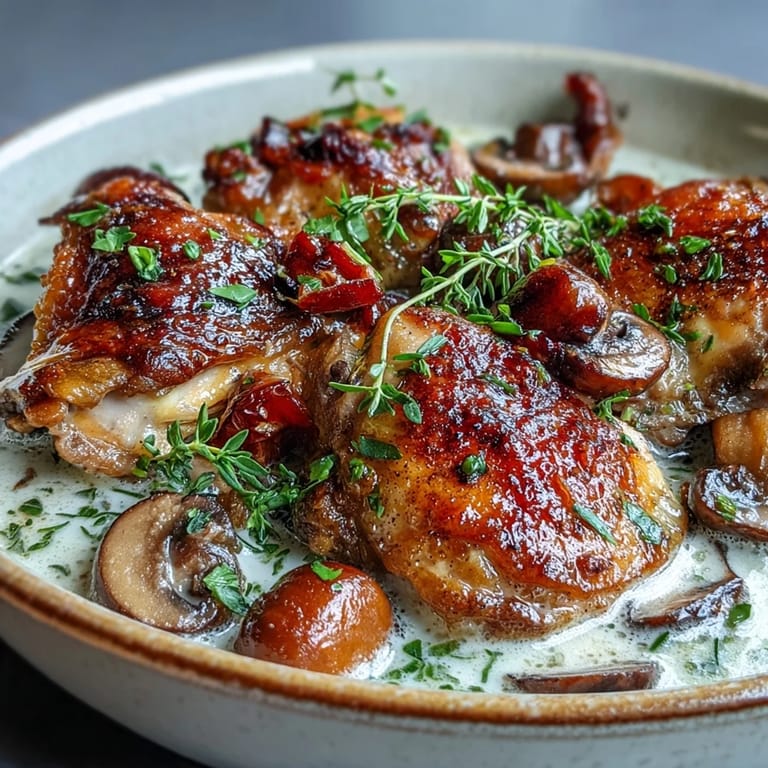
Save The first time I served this to my parents, my dad looked skeptical when I told him it was coq au vin. He's a red wine purist, the kind of person who thinks rosé is just for summer picnics. But halfway through his plate, he paused and said, this is really something, softer but still serious. My mom nodded and reached for seconds. That night, I realized this dish didn't need to prove itself, it just needed to be tasted.
Choosing the Right Rosé
Not all rosés are created equal, especially when you're cooking with them. You want something dry, with good acidity and structure, not a sweet or overly fruity bottle. I've had great success with Provence-style rosés or anything labeled brut or sec. If you can taste notes of strawberry, herbs, or citrus, you're on the right track. Avoid anything that tastes like candy or has residual sugar, because that sweetness will concentrate as the wine reduces and throw off the balance of your sauce. When in doubt, ask someone at the wine shop what they'd pair with roasted chicken, then cook with that.
Making It Ahead
This dish actually improves after a day in the fridge, which makes it perfect for entertaining or meal prep. The flavors marry and deepen as everything sits together, and the sauce thickens slightly as it cools. I like to make it the night before, let it chill completely, then gently reheat it on the stovetop over low heat, adding a splash of cream or stock if it's too thick. Just be careful not to boil it, or the cream might break. You can also freeze it without the cream, then stir the cream in after reheating for the freshest texture.
Serving Suggestions and Sides
This dish begs for something to soak up all that gorgeous sauce. I usually serve it over buttery mashed potatoes or tender boiled fingerlings, but it's just as good with crusty bread, egg noodles, or even a pile of creamy polenta. Rice works too, especially if you want to keep it simple and let the chicken shine. A crisp green salad on the side with a sharp vinaigrette cuts through the richness and makes the meal feel balanced. If you're feeling fancy, roasted asparagus or haricots verts add color and a little snap.
- Try it with a glass of the same rosé you cooked with, chilled, for a beautiful pairing.
- Leftovers make an incredible next-day lunch, especially spooned over toast or tossed with pasta.
- If you have extra sauce, save it and use it to braise vegetables or spoon over roasted fish.
 Save
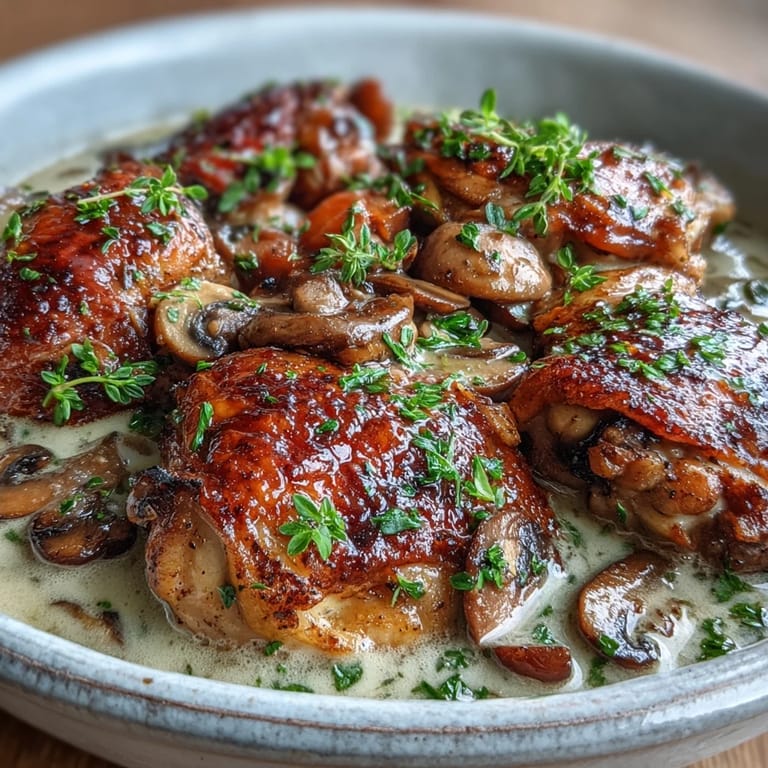
Save This recipe taught me that tradition is just a starting point, not a rule. Sometimes the most memorable meals come from using what you have and trusting your instincts in the kitchen.
Questions & Answers
- → What cut of chicken works best for Coq au Vin Rosé?
Bone-in, skin-on chicken thighs and drumsticks are recommended as they remain tender and flavorful during the braising process. The bones add depth to the sauce while the skin helps retain moisture.
- → Can I substitute the rosé wine with another type?
Yes, you can use a light red wine or even white wine, though rosé provides a unique balance of fruitiness and acidity. For best results, choose a dry wine you would enjoy drinking.
- → How do I make this dish dairy-free?
Replace the heavy cream with coconut cream or a dairy-free cream alternative. You can also use crème fraîche or reduce the wine sauce without adding cream for a lighter version.
- → What side dishes pair well with Coq au Vin Rosé?
Buttered potatoes, crusty French bread, steamed rice, or creamy mashed potatoes all work beautifully to soak up the rich sauce. Roasted vegetables or a simple green salad also complement the dish nicely.
- → Can I prepare this ahead of time?
Absolutely. Coq au Vin Rosé actually improves when made a day ahead as the flavors meld together. Refrigerate after cooking and gently reheat on the stovetop, adding a splash of wine or stock if needed.
- → How do I thicken the sauce if it's too thin?
Simmer the sauce uncovered for an additional 10-15 minutes to reduce naturally. Alternatively, mix 1 tablespoon of flour with a bit of cold water to create a slurry and stir it into the simmering sauce.