 Save
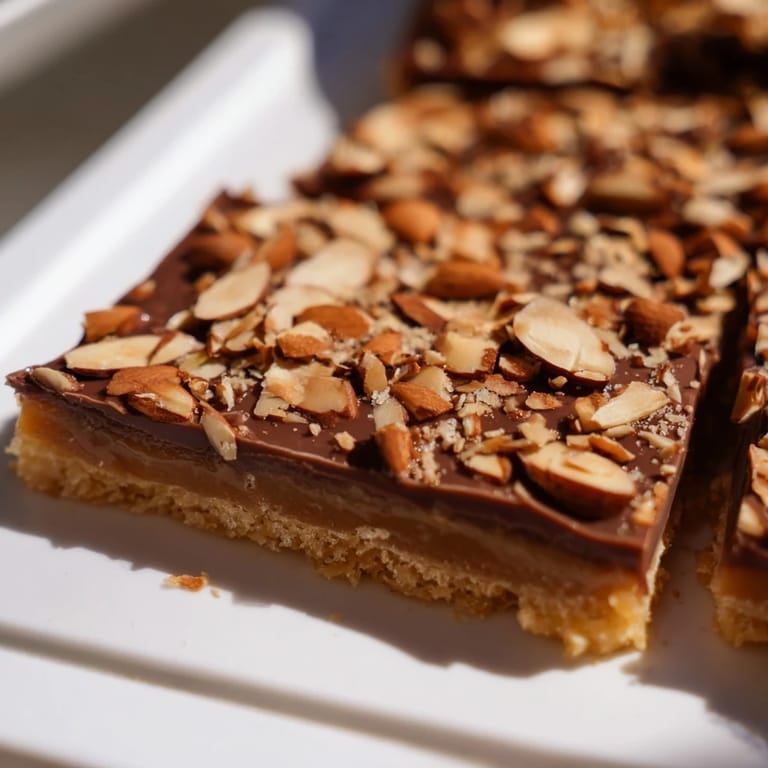
Save My grandmother kept a tin of English toffee on her kitchen counter, and I remember sneaking pieces whenever I visited. Years later, I decided to recreate it myself, convinced I'd somehow unlock her secret. What I discovered instead was simpler and more satisfying—there was no trick, just patience and a good thermometer. The moment that melted chocolate hit the hot toffee, I understood why she'd guarded that tin so carefully. Now I make it whenever I need something that feels both impressive and genuinely from the heart.
I made this for a winter potluck, and someone asked if I'd bought it from a fancy chocolatier. The look on their face when I said I'd made it at home was worth every careful stir of that saucepan. That afternoon taught me that homemade toffee doesn't need to be complicated to feel special—it just needs someone willing to stand there and watch it turn golden.
Ingredients
- Unsalted butter (1 cup): Use real butter, cold from the fridge initially, because it gives the toffee its rich, clean flavor without competing saltiness.
- Granulated sugar (1 cup): This is your sweetness anchor; don't substitute with brown sugar, which burns faster and tastes different.
- Fine sea salt (1/4 tsp): A tiny pinch that somehow makes the chocolate and almonds taste more like themselves.
- Water (2 tbsp): Helps the sugar dissolve evenly and prevents grainy crystals from forming.
- Pure vanilla extract (1 tsp): Adds depth without overpowering; use the real thing, not imitation.
- Milk chocolate (200 g): Chop it yourself if you can, so it melts more smoothly than chips sometimes do.
- Toasted sliced almonds (3/4 cup): The toasting matters—it brings out a warmth that raw almonds simply don't have.
Tired of Takeout? 🥡
Get 10 meals you can make faster than delivery arrives. Seriously.
One email. No spam. Unsubscribe anytime.
Instructions
- Prep your station:
- Line a 9x13-inch baking pan with parchment paper, making sure it comes up the sides a bit. Chop your chocolate and have the almonds ready nearby because once toffee starts its final push, you'll move fast.
- Combine your base:
- In a heavy-bottomed saucepan, combine butter, sugar, salt, and water over medium heat. Stir constantly with a wooden spoon until everything melts and blends together, which usually takes about 3–5 minutes and smells absolutely buttery and warm.
- Watch for the magic color:
- Keep stirring as the mixture darkens from pale yellow to amber to a deep golden brown. This is where patience meets attentiveness—you're aiming for 300°F on a candy thermometer, and the whole process takes about 10–15 minutes, though every stove is different.
- Add vanilla and pour:
- Remove from heat, quickly stir in the vanilla extract, then immediately pour the hot toffee into your prepared pan. Work fast but don't panic; spread it evenly with a spatula before it begins to set.
- Layer the chocolate:
- Let the toffee sit for exactly 2 minutes, then sprinkle the chopped chocolate over the surface. Wait another 2 minutes for it to soften from the residual heat, then gently spread it into an even layer with an offset spatula.
- Top with almonds:
- While the chocolate is still soft, sprinkle the toasted almonds across the top and press them in lightly so they stick. The chocolate will hold them in place as everything cools and sets.
- Cool completely:
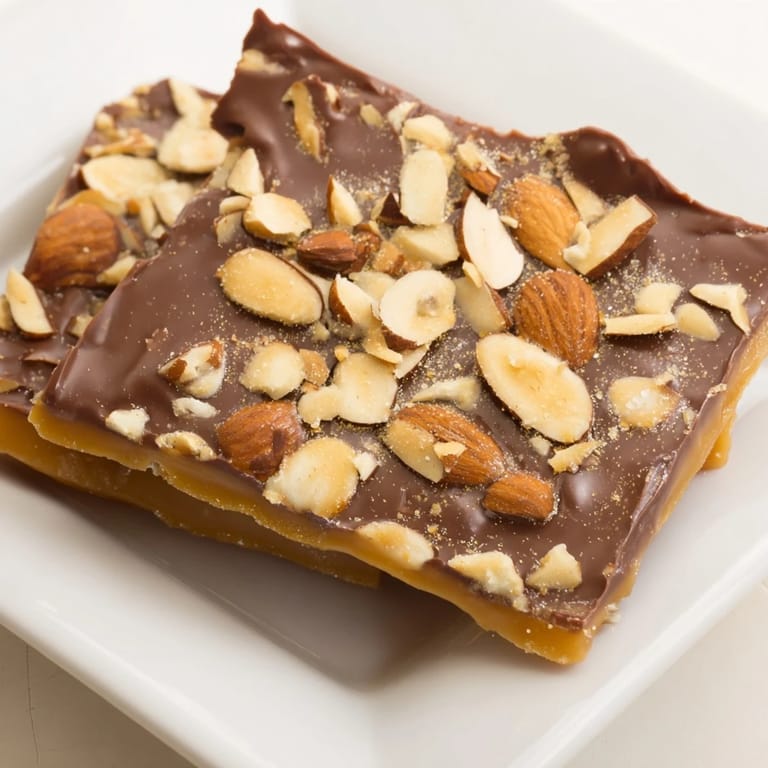
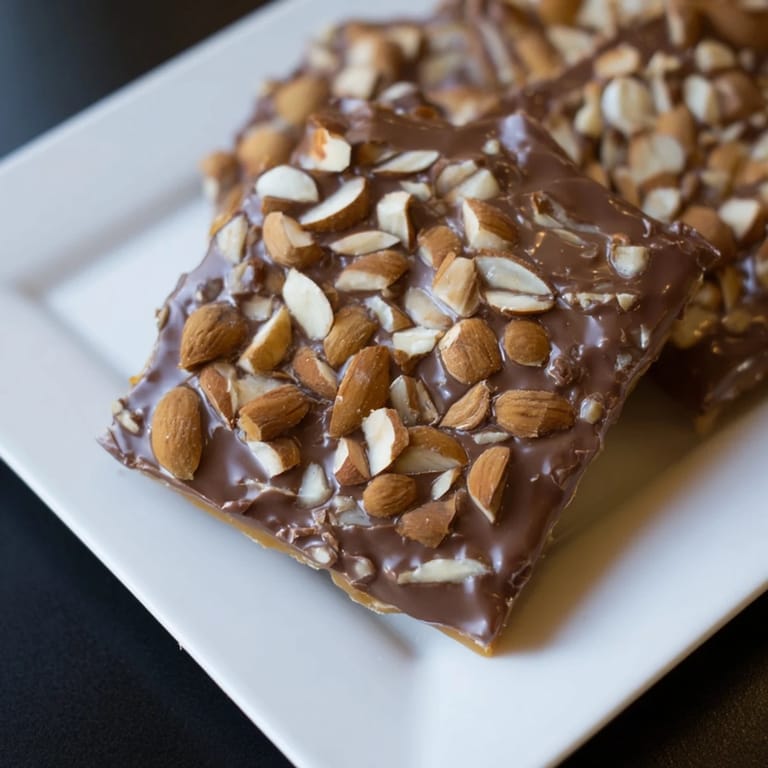
- Let it sit at room temperature for about 2 hours, or speed things up by refrigerating for 30–40 minutes until fully hardened. Breaking it into irregular pieces feels more artisanal than cutting perfect squares.
 Save
Save I learned the real magic of this recipe when someone told me it reminded them of childhood, of a treat they thought they'd never taste again. Food that bridges time like that—that carries someone's memory—is worth making well. Every batch I make now feels like I'm keeping that memory alive too.
Choosing Your Chocolate
Milk chocolate is traditional and approachable, giving you that nostalgic sweetness that most people recognize from childhood candies. If you're feeling adventurous, dark chocolate creates a sophisticated bittersweet contrast that makes the almonds and salt sing. I've tried semi-sweet chocolate too, and it lands right in the middle—less sweet, more complex, but still perfectly delicious. The choice honestly depends on what you're in the mood for and who you're feeding.
Storage and Make-Ahead Magic
This toffee is one of those rare recipes that actually improves your life by existing in your kitchen. Once fully cooled, store it in an airtight container in a cool, dry place, and it keeps beautifully for two weeks without any special treatment. I like breaking mine into irregular pieces as I go, wrapping special ones in parchment for gifts or just eating them straight from the container when I need something crispy and sweet.
Variations Worth Exploring
English toffee is wonderfully flexible once you understand the basic technique. I've made it with different nuts—cashews, hazelnuts, even crushed pistachios—and each one tells its own story on the palate. Dark chocolate swaps in beautifully for those who prefer less sweetness, and a nut-free version works perfectly with toasted seeds like pumpkin or sunflower if you're accommodating allergies.
- Try fleur de sel on top before the chocolate sets for a sophisticated salt-sweet balance that changes everything.
- A light dusting of espresso powder mixed into the chocolate layer adds intrigue without making it taste like coffee.
- For a gift-worthy presentation, wrap individual pieces in parchment and stack them in a small box tied with twine.
 Save
Save This toffee has a way of turning an ordinary afternoon into something memorable. Make it when you want to remind someone—or yourself—that simple things done thoughtfully become treasured.
Questions & Answers
- → What temperature should the toffee reach when cooking?
Cook the toffee mixture until it reaches 300°F (150°C), known as the hard crack stage, to achieve the right crunch.
- → Can the milk chocolate be replaced with another type?
Yes, dark chocolate can be used instead for a richer, slightly bitter contrast to the buttery toffee.
- → How do I prevent the toffee from sticking to the pan?
Line your baking pan with parchment paper or a silicone mat before pouring in the toffee to ensure easy removal.
- → What is the purpose of adding vanilla extract after cooking?
Vanilla adds a warm, aromatic flavor that enhances the buttery sweetness of the toffee base.
- → How should the toffee be stored once set?
Store in an airtight container at room temperature for up to two weeks to maintain freshness and crunch.
- → Are there nut-free alternatives for the topping?
To accommodate allergies, omit almonds or replace them with toasted seeds like pumpkin or sunflower seeds.