 Save
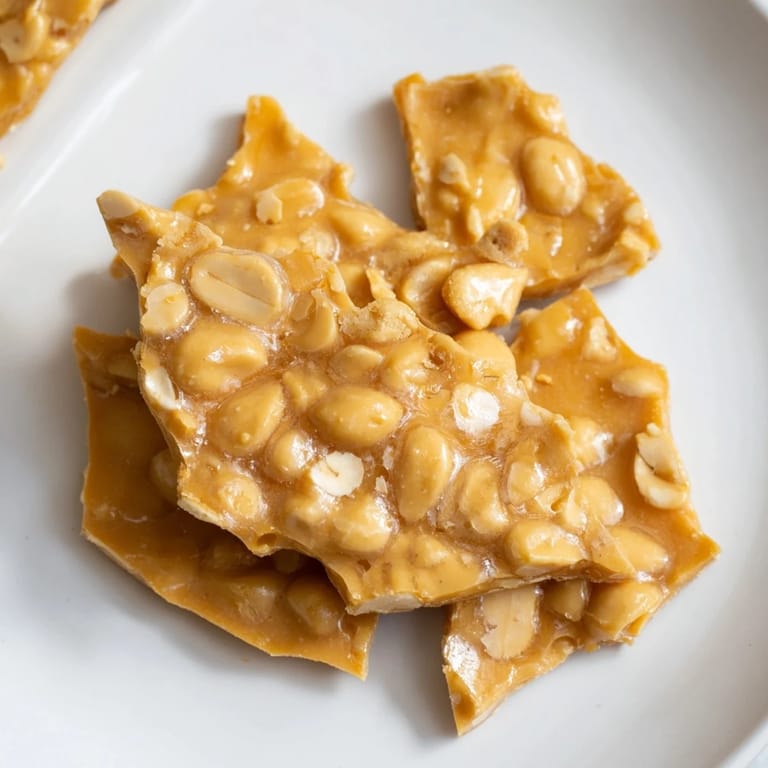
Save My grandmother had a tin of peanut brittle hidden behind the flour canister, one she'd pull out during December when the house smelled like pine needles and cinnamon. I must have been seven or eight when she finally let me watch her make it—the sugar bubbling and turning amber in the pale kitchen light, her steady hands moving with a confidence I couldn't quite replicate. That first batch I attempted on my own came out soft and sticky, a failed experiment that taught me everything about timing and heat. Now, when I make peanut brittle, I think of her checking the thermometer with the patience of someone who'd done this a hundred times before.
I made this for my neighbor last winter after she'd brought soup during a rough week, and I remember standing in my kitchen listening to the candy thermometer click as it rose, thinking about how something so delicate and crisp could feel like such a genuine thank you. She cried when she opened the tin, not because of the candy itself, but because of the time it represented—the five minutes of watching, the precision required, the care folded into each piece.
Ingredients
- Granulated sugar (1 cup): This is your base; it caramelizes and creates the hard toffee shell that makes brittle brittle. Weigh it if you can—volume measurements can vary and throw off your candy.
- Light corn syrup (1/2 cup): This prevents the sugar from crystallizing mid-boil and gives the toffee that glossy, glass-like quality that shatters cleanly between your teeth.
- Water (1/4 cup): Just enough to dissolve the sugar at the start; too much and you'll be cooking longer than you need to.
- Salt (1/4 tsp): Don't skip this—it wakes up the sweetness and adds a subtle depth that makes people ask for the recipe.
- Unsalted butter (2 tbsp): Cut it into small pieces so it melts instantly when you add it off-heat; this prevents any seizing or graininess.
- Vanilla extract (1 tsp): Adds a whisper of warmth that lingers after the crunch fades.
- Roasted, unsalted peanuts (1 1/2 cups): Toast them yourself if you have time—the deeper flavor is worth the extra step.
- Baking soda (1 tsp): This is the magic ingredient that aerates the mixture, lightening it and creating those tiny air pockets that make it shatter so satisfyingly.
Tired of Takeout? 🥡
Get 10 meals you can make faster than delivery arrives. Seriously.
One email. No spam. Unsubscribe anytime.
Instructions
- Prep your stage:
- Line your baking sheet with parchment paper and grease it lightly—you want the brittle to slide off without sticking once it cools. Have all your ingredients measured and ready; once this mixture hits the hard crack stage, there's no pausing.
- Combine and dissolve:
- In a heavy-bottomed saucepan over medium heat, add the sugar, corn syrup, water, and salt. Stir gently as the sugar dissolves, then stop stirring once it comes to a boil. The thermometer becomes your compass from here forward.
- Climb to hard crack:
- Watch the thermometer rise to 300°F without stirring—this takes about 10 to 15 minutes depending on your stove. The mixture will deepen from clear to pale gold to rich amber. Once it hits 300°F, it's ready; a few degrees too far and the flavor turns bitter.
- Build the toffee:
- Pull the pan off heat immediately and stir in the butter and vanilla. The temperature will drop slightly, but the residual heat finishes the job. Quickly add the peanuts and stir until every one is coated in that glossy toffee.
- Aerate with baking soda:
- Add the baking soda and stir vigorously—it will foam and bubble, and the mixture will lighten in color and texture. This is the moment the brittle transforms from dense caramel to that delicate, airy candy.
- Spread and set:
- Pour onto your prepared baking sheet immediately and use a greased spatula to spread it thin and even, about a quarter-inch thick. The cooler the sheet, the longer you have to work; some people chill the pan beforehand for a few extra seconds of working time.
- Cool and break:
- Let it rest at room temperature for about thirty minutes. Once it's completely firm, break it into pieces with your hands or a butter knife. The thinner you spread it, the cleaner the break.
 Save
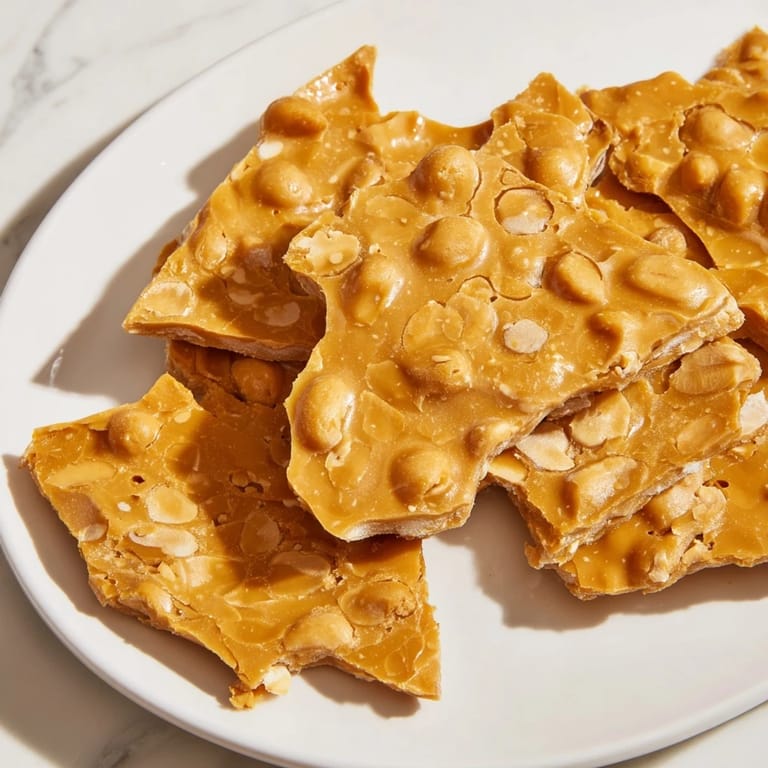
Save There's something almost meditative about the moment right before you pour the brittle onto the sheet—the kitchen gets quiet, you're completely focused, and then suddenly there's this golden river of candy spreading across parchment, catching the light. That five-second window between perfect and ruined teaches you something about attention and timing that no other recipe quite demands.
Troubleshooting the Common Mistakes
If your brittle turned out grainy instead of glossy, the sugar likely crystallized during boiling—this happens when you stir too much or when stray sugar crystals form on the sides of the pan. Next time, use a wet pastry brush to wipe down the sides as the mixture cooks, and resist the urge to stir once it's boiling. If you ended up with a soft, chewy mess, you didn't reach 300°F; invest in a good thermometer and trust it. If the brittle tastes bitter or burnt, your heat was too high or you let it cook past 300°F—medium heat is your friend, and patience is your greatest tool.
Variations That Actually Work
I've swapped the peanuts for cashews on a whim and been surprised by how elegant it becomes—cashews add a buttery depth that feels almost luxurious. Almonds make it denser and more sophisticated, pecans bring an earthiness that works beautifully with a pinch of cinnamon stirred in right after the baking soda, and macadamia nuts create something almost decadent. You can also play with the finishing touch: a sprinkle of flaky sea salt right before it sets adds contrast and complexity, while a brush of melted chocolate once the brittle has cooled creates an entirely different kind of indulgence.
Storage and Gifting
Peanut brittle keeps beautifully in an airtight container for up to two weeks, though it rarely lasts that long in any house I know. The key is protecting it from humidity and curious hands; I layer mine between parchment paper so the pieces don't stick to each other. For gifting, arrange it in a tin or box with tissue paper, and it instantly feels like a treasure—people remember homemade candy far longer than they remember store-bought sweets.
- Pack it in airtight containers with silica packets if you live in a humid climate.
- Wrap individual pieces in wax paper if you're stacking them, so they don't bond together.
- A handwritten note about the batch date makes it feel even more personal.
 Save
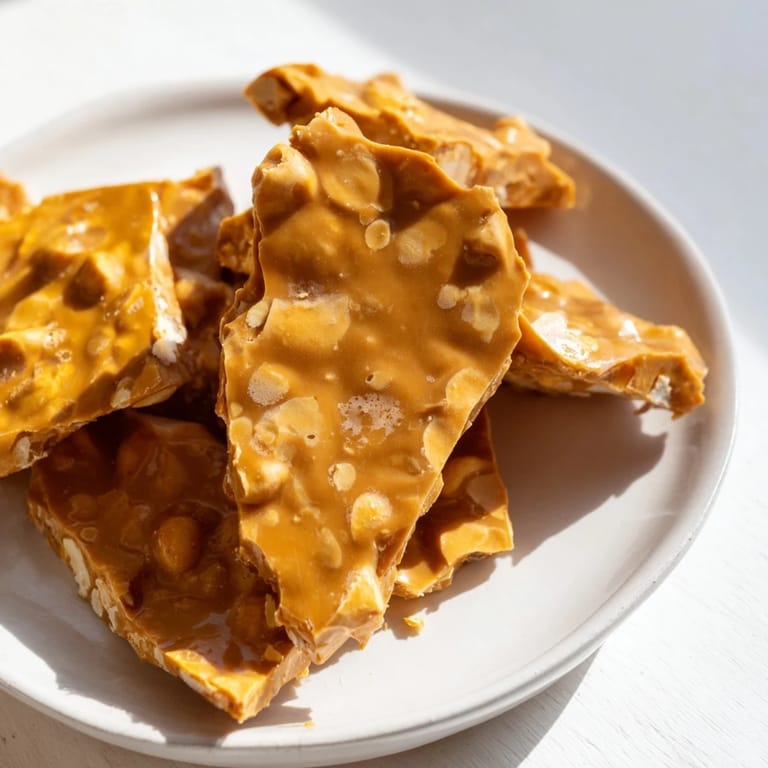
Save Making peanut brittle becomes less about following steps and more about developing an instinct for heat and timing. The first time you nail it, you'll know—the candy will snap cleanly, taste balanced, and feel like you've figured out something small but meaningful about cooking itself.
Questions & Answers
- → What temperature should the sugar mixture reach?
Heat the sugar mixture to 300°F (150°C), the hard crack stage, to ensure the brittle sets with a crisp texture.
- → Can I use other nuts instead of peanuts?
Yes, substitutions such as cashews, almonds, or pecans work well and offer unique flavor twists.
- → Why is baking soda added to the mixture?
Baking soda creates bubbles that lighten the toffee, giving the brittle a delicate, airy crunch.
- → How should I store the finished brittle?
Keep the brittle in an airtight container at room temperature to maintain its crispness and freshness.
- → Can I add salt to enhance the flavor?
Sprinkling flaky sea salt over the brittle before it sets adds a pleasant salty contrast to the sweet toffee.