 Save
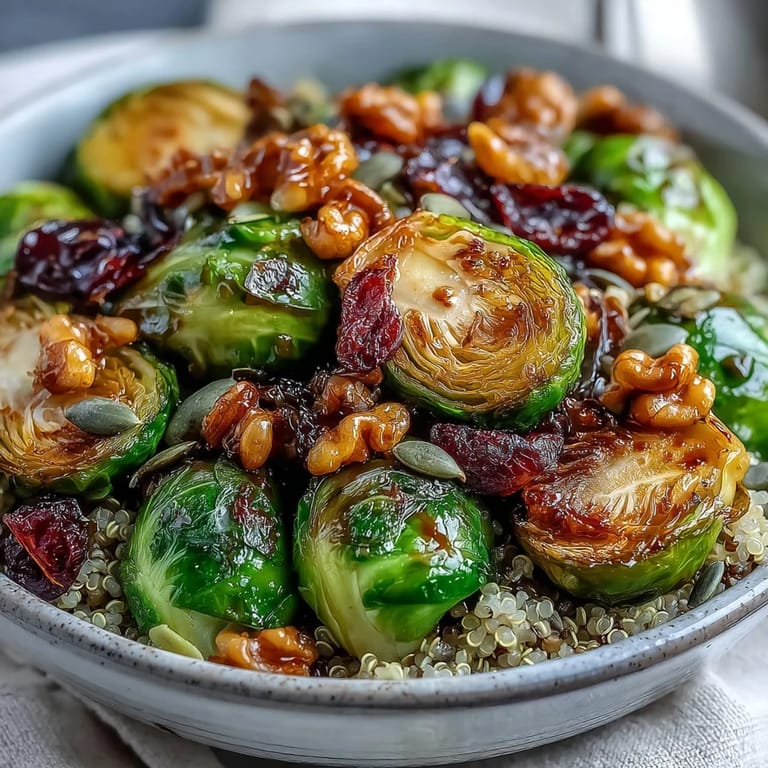
Save My neighbor stopped by one Tuesday evening with a container of roasted Brussels sprouts from her farmers market haul, insisting I try them with some grain she'd been experimenting with. I was skeptical at first—Brussels sprouts have never been my go-to vegetable—but the moment those caramelized edges hit my tongue, something clicked. The way the vinegar cut through the richness, how the grains soaked up that tangy dressing, it all made sense suddenly. That bowl became my answer to the question I'd been asking myself for weeks: what actually tastes as good as it makes you feel?
I made this for a potluck last month where everyone brought something trying too hard, and I almost didn't go because of it. But I brought four of these bowls anyway, still warm in a container, and ended up spending the whole evening watching people eat in silence—the good kind of silence where the food is just speaking for itself. Someone asked for the recipe before dessert was even served.
Ingredients
- Brussels sprouts, 1 lb trimmed and halved: The stars of the show—their natural sweetness deepens when caramelized in high heat, turning bitter into something almost nutty and irresistible.
- Red onion, 1 medium thinly sliced: These soften and sweeten alongside the Brussels sprouts, adding a subtle color contrast and gentle sweetness that balances the whole bowl.
- Olive oil, 2 tbsp for roasting: Just enough to coat everything and let the oven work its magic without overwhelming the vegetables.
- Salt and black pepper, 1/2 tsp and 1/4 tsp: Season generously on the vegetables—they need this more than you think to bring out their best flavor.
- Quinoa or brown rice, 1 cup uncooked: Pick whichever you have on hand; quinoa is nuttier and faster, rice is more classic and filling.
- Water or vegetable broth, 2 cups: Broth adds more flavor if you have it, but water works just fine.
- Balsamic vinegar, 1/4 cup: The backbone of the dressing—use one you actually like, because you'll taste it directly.
- Extra-virgin olive oil, 2 tbsp for dressing: This is different from the roasting oil; better quality here makes a real difference.
- Maple syrup or honey, 1 tbsp: Just enough to round out the vinegar's sharp edges without making it sweet.
- Dijon mustard, 1 tsp: Adds depth and helps emulsify the dressing so it coats everything evenly.
- Walnuts, pecans, dried cranberries, pumpkin seeds optional: Toast the nuts yourself if you can—it takes five minutes and changes everything.
Tired of Takeout? 🥡
Get 10 meals you can make faster than delivery arrives. Seriously.
One email. No spam. Unsubscribe anytime.
Instructions
- Set your oven and prep:
- Preheat to 425°F and line a baking sheet with parchment paper—this prevents sticking and makes cleanup almost pleasant. You want the oven properly hot so those Brussels sprouts get that golden, crispy exterior.
- Coat and spread the vegetables:
- In a large bowl, toss the halved Brussels sprouts and sliced red onion with 2 tablespoons olive oil, salt, and pepper until everything is evenly coated. Spread them in a single layer on your baking sheet, cut-side down if possible—this is how they get those beautiful caramelized bottoms.
- Let the oven do the work:
- Roast for 25 to 30 minutes, stirring once halfway through so they cook evenly. You'll know they're ready when the edges are deep golden-brown and the insides are tender enough to pierce easily with a fork.
- Cook your grains while vegetables roast:
- Rinse quinoa (or rice if using) under cold water, then combine with 2 cups water or broth in a saucepan. Bring to a boil, lower the heat to a gentle simmer, cover, and let it cook undisturbed for 15 to 20 minutes until the liquid absorbs and the grains are tender. Fluff gently with a fork.
- Whisk the dressing together:
- In a small bowl, whisk balsamic vinegar, extra-virgin olive oil, maple syrup, Dijon mustard, salt, and pepper until it comes together as a glossy, unified sauce. Taste it—adjust the sweetness or tang to your preference before moving forward.
- Assemble your bowl:
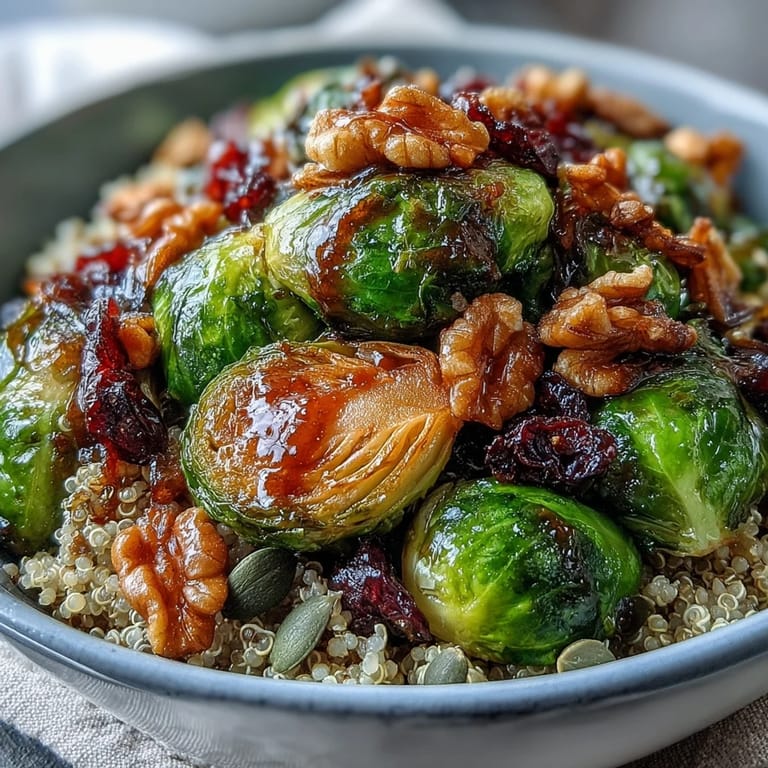
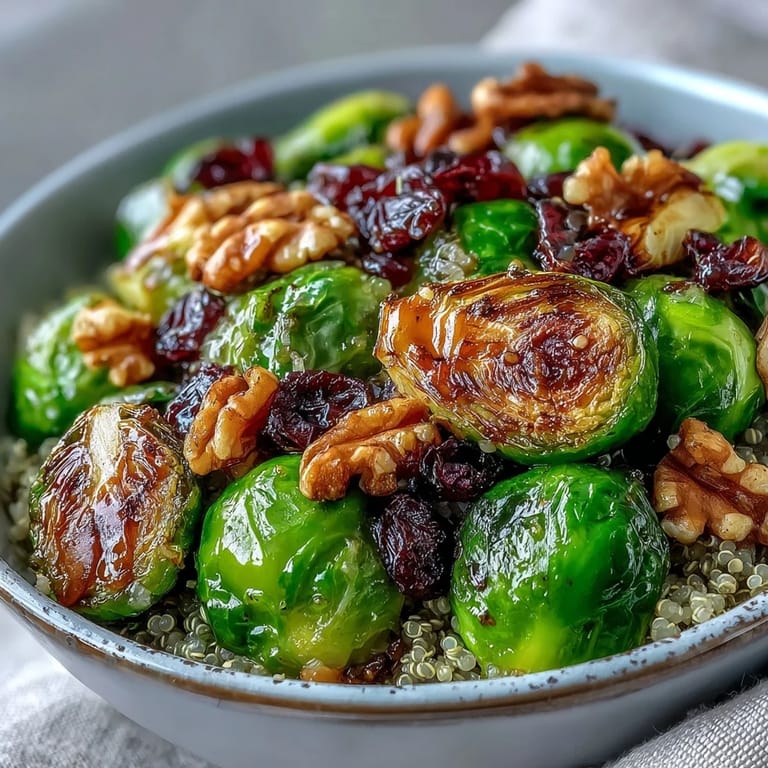
- Divide the cooked grains among four bowls, then pile the roasted Brussels sprouts and caramelized onions on top. Drizzle generously with balsamic dressing so it pools slightly into the grains.
- Finish with toppings:
- If using them, scatter toasted nuts, dried cranberries, and pumpkin seeds across the top just before serving. This adds texture and a little richness that keeps each bite interesting.
 Save
Save I've learned that this bowl gets better as it sits, the dressing soaking into the grains while everything cools slightly. My friend who gave me that first container now asks me to make it whenever she hosts dinner, which still surprises me in the best way.
How to Make This Your Own
The beauty of this bowl is how adaptable it is without losing its identity. I've swapped the grains a dozen different ways—farro feels more substantial, couscous is lighter and faster, even leftover rice works if you're being resourceful on a Wednesday night. The vegetables can shift too depending on what's in season or what you're craving: roasted sweet potatoes add sweetness and color, carrots stay tender and slightly caramelized, and I've even added roasted chickpeas on mornings when I knew I needed more protein.
The Dressing is Everything
That balsamic dressing is genuinely the reason people ask for this recipe instead of just nodding politely. It's not trying to be fancy—it's straightforward and honest, with just enough mustard to keep it from being one-note and just enough sweetness to make you want another bite. I've made it with honey instead of maple syrup and barely noticed a difference, which means you can use whatever you have in your pantry without guilt.
Storage and Serving
This bowl tastes wonderful warm right out of the kitchen, but it's equally delicious at room temperature, which is why it's become my favorite thing to pack for lunch the next day. The flavors actually meld together better as it sits, the dressing working its way into every grain. I usually store the components separately and assemble when I'm ready to eat, but if you're eating it all at once, everything together keeps fine in a container for up to three days.
- Keep the dressing in a small jar and shake it before drizzling, since it naturally separates as it cools.
- If you're doubling this recipe, roast the vegetables in two batches rather than cramming them onto one sheet.
- The toppings stay crispest if you add them just before eating, but honestly, they're good either way.
 Save
Save This bowl became my answer to weeknight cooking that doesn't feel like a compromise. It's the kind of food that makes you feel taken care of by your own hands.
Questions & Answers
- → Can I make this ahead of time?
Yes, prepare components up to 3 days ahead. Store grains, roasted vegetables, and dressing separately. Assemble when ready to serve, adding toppings at the last minute for best texture.
- → What grains work best?
Quinoa and brown rice are excellent choices. Farro adds chewy texture, bulgur cooks quickly, and couscous offers light fluffiness. Choose based on preference and cooking time available.
- → How do I get properly caramelized sprouts?
Use a hot oven at 425°F, spread vegetables in a single layer without overcrowding, and roast until deeply golden. Don't stir too frequently—let them develop a crust before flipping halfway through.
- → Can I add protein?
Absolutely. Chickpeas, grilled tofu, roasted chickpeas, or feta cheese work beautifully. Add cooked chicken or salmon if not keeping it plant-based. Stir protein in when assembling bowls.
- → Is the dressing essential?
The balsamic dressing ties everything together with its sweet-tangy balance. Substitute with lemon-tahini, apple cider vinaigrette, or a simple olive oil and lemon juice blend if preferred.