 Save
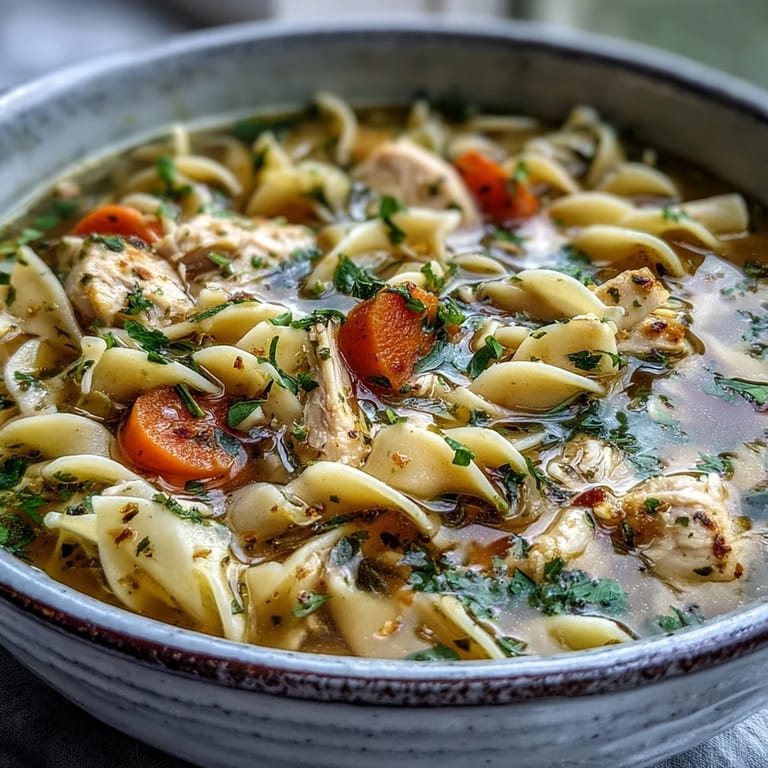
Save My sister called on a Tuesday afternoon, voice thick with exhaustion, asking if I had something quick for dinner. Twenty minutes later, she was cradling a steaming bowl of chicken noodle soup, and I watched her shoulders finally relax. That's when I understood this soup isn't just about the ingredients—it's about how fast comfort can arrive when you need it most. The kind of dish that feels both simple and somehow exactly right, no matter the season or mood.
I made this for my neighbor when her son came home sick from school, and she later told me it was the first thing he actually wanted to eat. There's something about the way the noodles soften, how the chicken becomes so tender it barely needs chewing—it feels nourishing in a way that matters when someone isn't feeling their best.
Ingredients
- 2 boneless, skinless chicken breasts (about 350 g), diced: Cut them into bite-sized pieces so they cook quickly and distribute evenly throughout the pot; uneven chunks mean some pieces turn rubbery while others stay soft.
- 1 medium onion, diced: The foundation of flavor—don't skip this or rush the sauté, because that's where the soup's soul begins.
- 2 medium carrots, peeled and sliced: Slice them thin enough to soften in the broth but thick enough to hold their shape and sweetness.
- 2 celery stalks, sliced: This is the quiet ingredient nobody thinks about until they taste a soup without it and wonder what's missing.
- 2 cloves garlic, minced: Fresh garlic wakes up the entire pot, so don't substitute powder here if you can help it.
- 1.5 liters (6 cups) low-sodium chicken broth: Low-sodium lets you control the salt and prevents the soup from tasting aggressively salty by the end.
- 120 g (4 oz) egg noodles: These are gentler and more tender than dried pasta shapes; they absorb broth without turning mushy if you time it right.
- 1 bay leaf: Add it whole and remove it before serving—it steeps the broth with subtle depth without dominating.
- 1/2 teaspoon dried thyme: Thyme feels like it was made for chicken; it's herbaceous without being sharp.
- 1/2 teaspoon dried parsley (plus extra for garnish): The fresh garnish at the end changes everything, adding brightness that the dried version hinted at.
- Salt and freshly ground black pepper, to taste: Taste as you go and adjust at the end; you'll be surprised how much difference the final seasoning pass makes.
- 2 tablespoons olive oil: Use it to gently coax flavor from the vegetables rather than blast them on high heat.
Tired of Takeout? 🥡
Get 10 meals you can make faster than delivery arrives. Seriously.
One email. No spam. Unsubscribe anytime.
Instructions
- Build your flavor base:
- Heat the olive oil over medium heat until it shimmers slightly, then add the diced onion, carrots, and celery. You'll hear them start to soften after about 3 minutes—don't rush this part, because these vegetables are releasing their sweetness into the oil, creating the foundation for everything that comes next.
- Wake up the garlic:
- Stir in the minced garlic and let it cook for just 1 minute, watching it turn pale gold and fill your kitchen with that unmistakable aroma. Any longer and it starts to brown, which tastes bitter.
- Sear the chicken:
- Add the diced chicken and cook it, stirring occasionally, for 3–4 minutes until the outside turns opaque white. You're not fully cooking it here—just giving it a head start and a light color.
- Bring it all together:
- Pour in the chicken broth, then add the bay leaf, thyme, parsley, a good pinch of salt, and several grinds of black pepper. Bring everything to a gentle boil—you'll see larger bubbles breaking the surface consistently.
- Let it simmer gently:
- Reduce the heat to medium-low and simmer uncovered for 10 minutes, allowing the flavors to meld and the chicken to cook through completely. The broth will smell increasingly savory and warm.
- Add the noodles:
- Stir in the egg noodles and simmer for 8–10 minutes until they're tender and the chicken is cooked through. Bite a noodle to check—it should have no hard center.
- Taste and finish:
- Fish out the bay leaf with a spoon, then taste the soup and adjust the salt and pepper. Remember, you can always add more seasoning, but you can't take it out.
- Serve with warmth:
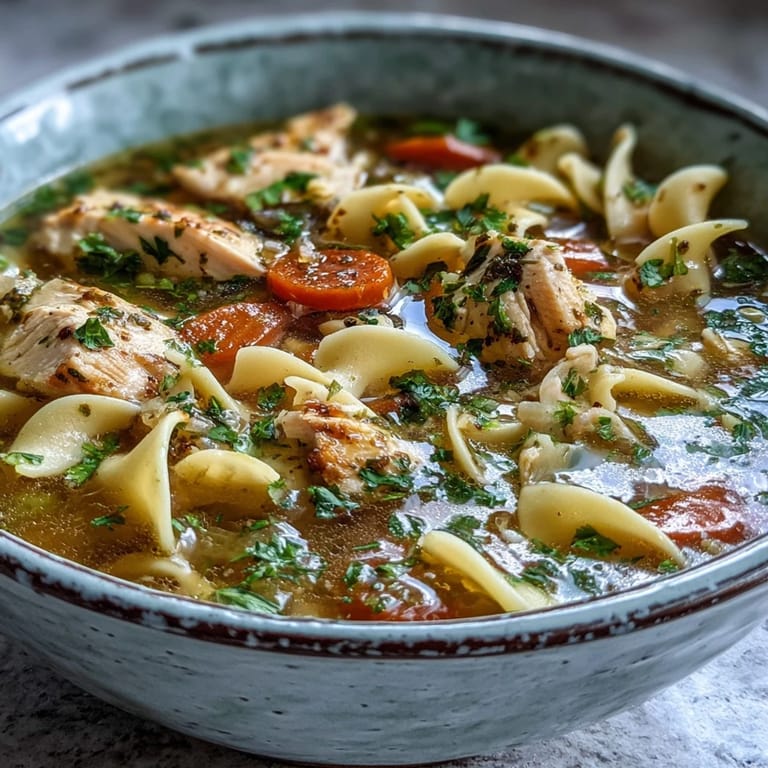
- Ladle the soup into bowls and sprinkle fresh parsley over the top, which adds color and a gentle brightness that brings the whole bowl to life.
 Save
Save  Save
Save Last winter, I made this soup and left a container with my elderly neighbor who'd just gotten out of the hospital. She told me later that she ate it three days in a row, each time feeling a little stronger. That's when I realized this isn't complicated cooking—it's just taking care of someone, one warm spoonful at a time.
When You Want It Even Better
Once you've made this soup a few times, you'll start noticing ways to make it yours. I've added rotisserie chicken on lazy nights, used bone-in thighs for deeper flavor, and thrown in handfuls of fresh spinach at the last second. The beauty of this recipe is that it's flexible enough to bend to what you have on hand, but structured enough that it always tastes good.
Timing and Temperature
The secret to perfect chicken noodle soup is understanding that everything happens in stages. The vegetables take the longest to soften, the chicken cooks surprisingly fast, and the noodles are the last addition because they continue softening after the heat turns off. I used to make the mistake of adding everything at once, which meant either crunchy vegetables or mushy noodles—never both just right.
Small Details That Matter
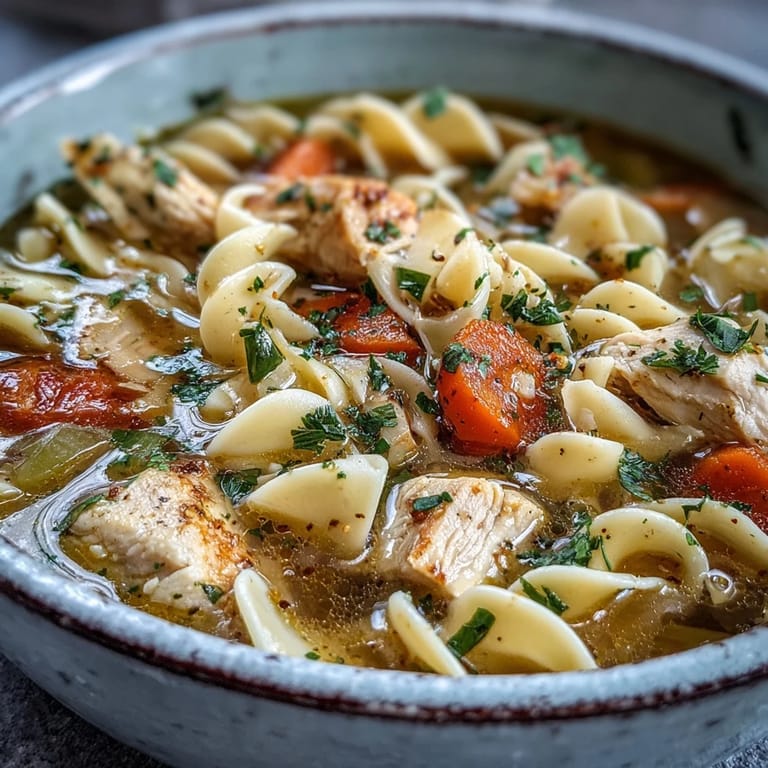
The difference between soup that tastes like it came from a can and soup that tastes homemade often comes down to things nobody thinks to mention. Fresh garlic instead of powder, tasting and adjusting seasoning at the end, letting the vegetables actually soften instead of rushing them—these small moments build flavor. When you ladle it into a bowl and that steam rises up, carrying herbaceous thyme and savory broth, you'll know you did it right.
- Slice your carrots thin so they soften in time with the noodles, not long after.
- Add a splash of lemon juice just before serving if you want brightness that cuts through the richness.
- Make extra and freeze it in portions—it reheats beautifully and tastes even better the next day.
 Save
Save  Save
Save This soup is proof that the best comfort food doesn't require fancy techniques or rare ingredients—just attention, a warm pot, and the intention to feed someone well. Make it often, make it yours, and watch how it becomes the dish people ask for when they need something real.
Questions & Answers
- → Can I use rotisserie chicken instead of raw chicken breasts?
Yes, rotisserie chicken works perfectly. Add the shredded chicken during the last 5 minutes of cooking to warm it through without overcooking.
- → What type of noodles work best for this soup?
Traditional egg noodles are ideal, but you can substitute with wide egg noodles, fusilli, or even rice noodles for a gluten-free option.
- → How do I store leftover chicken noodle soup?
Store in an airtight container in the refrigerator for up to 4 days. Note that noodles will absorb liquid, so you may need to add extra broth when reheating.
- → Can I freeze this soup?
Yes, but it's best to freeze without the noodles. Cook and add fresh noodles when reheating for better texture. Freeze for up to 3 months.
- → How can I make this soup more flavorful?
Use homemade chicken stock, add a splash of lemon juice before serving, or include fresh herbs like dill or thyme. A parmesan rind simmered in the broth also adds depth.
- → What vegetables can I add or substitute?
Try adding peas, corn, green beans, or spinach. You can also substitute parsnips for carrots or add diced potatoes for extra heartiness.