 Save
Save One crisp October afternoon, my kitchen filled with the smell of caramelizing squash, and I realized this soup had quietly become my answer to everything—gray mornings, tired evenings, dinner parties where I needed something that felt both simple and special. There's something almost meditative about butternut squash soup, the way it transforms from chunks of raw orange into pure silk, and how a single bowl can warm you from the inside in a way that feels less like eating and more like being held.
I made this for my neighbor last November when she was recovering from surgery, and watching her face as she tasted it—that moment when the coconut milk swirled in and the nutmeg hit—reminded me why I cook at all. She asked for seconds before I'd even finished plating, and suddenly a simple soup felt like the most meaningful thing I'd made that year.
Ingredients
- Butternut squash (1 medium, about 1.2 kg): Roasting it first caramelizes the natural sugars and deepens the flavor in a way you won't get by boiling it, so don't skip that step even though it takes a few extra minutes.
- Onion and carrots (1 large onion, 2 medium carrots): These build the aromatic base—the softer they get, the sweeter the soup becomes, so don't rush the sautéing.
- Garlic (2 cloves, minced): Add it after the softer vegetables so it doesn't burn and turn bitter.
- Vegetable stock (800 ml): The quality matters here; use something you'd actually drink on its own, not the tinny stuff hiding in the back of the cupboard.
- Coconut milk (200 ml): This creates that velvety finish, but heavy cream works beautifully too if that's what you have on hand.
- Olive oil (2 tbsp total): Split between roasting the squash and sautéing the vegetables—good oil makes a real difference.
- Cumin and nutmeg (1/2 tsp and 1/4 tsp): These spices are what push the soup from pleasant to memorable; the nutmeg especially should be freshly grated if you can manage it.
- Salt and black pepper: Taste as you go near the end—you'll need more than you think once the coconut milk goes in.
Tired of Takeout? 🥡
Get 10 meals you can make faster than delivery arrives. Seriously.
One email. No spam. Unsubscribe anytime.
Instructions
- Get your oven ready:
- Preheat to 200°C (400°F) so it's properly hot when your squash goes in.
- Roast the squash until golden:
- Toss the diced butternut squash with 1 tablespoon olive oil, salt, and pepper, then spread it on a baking tray and let it roast for 25 minutes until the edges are caramelized and it's tender enough to fall apart. You'll smell when it's ready—that's your signal.
- Build your flavor base:
- While the squash roasts, heat the remaining tablespoon of olive oil in a large pot over medium heat and add your chopped onion and carrots. Let them soften for 5 to 7 minutes, stirring occasionally so they get golden but don't brown.
- Wake up the spices:
- Add the minced garlic along with the cumin and nutmeg, and cook for just about a minute until the kitchen smells like comfort. Don't let the garlic sit too long or it'll taste harsh.
- Bring it together:
- Add the roasted squash to the pot, pour in the vegetable stock, and bring everything to a gentle boil, then lower the heat and let it simmer quietly for 10 minutes so the flavors can marry.
- Blend until silky:
- Remove from heat and use an immersion blender to purée the soup until it's completely smooth—if you're using a regular blender, work in careful batches and let the steam escape so you don't get burned. The transformation from chunky to velvety happens fast and it's oddly satisfying.
- Finish with cream and seasoning:
- Stir in the coconut milk, heat it gently through, and then taste and adjust your salt and pepper—this is crucial because the soup will taste quite different now. Sometimes I add just a pinch of chili flakes here too if I'm feeling like it needs that little edge.
- Plate and garnish:
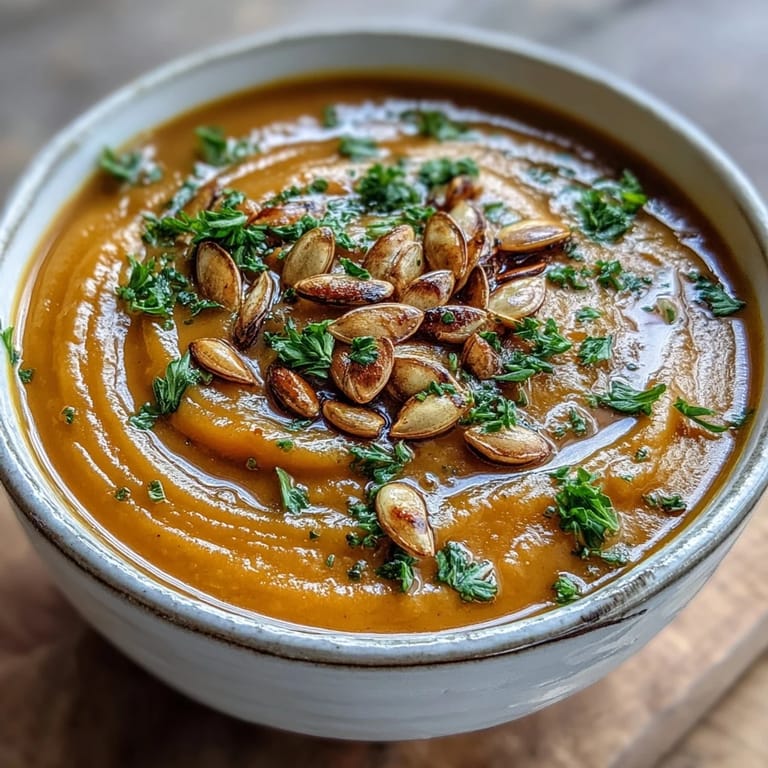
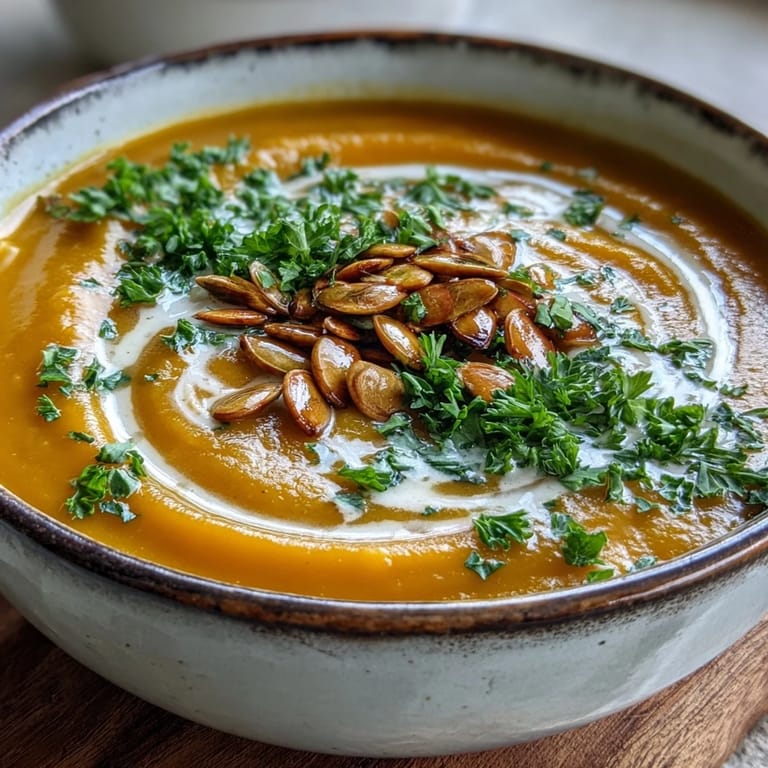
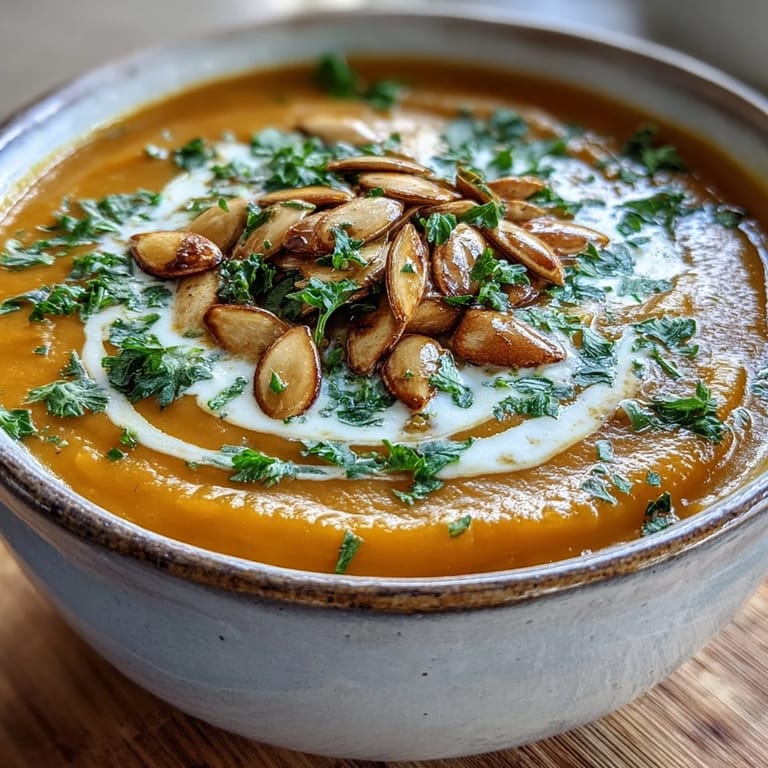
- Ladle the soup into bowls and top with whatever calls to you—fresh herbs, toasted pumpkin seeds, and a swirl of extra coconut milk or cream look beautiful and taste even better.
 Save
Save There was a Sunday in January when I made this soup while my kids played in the next room, and the sound of their laughter mixed with the hum of the blender felt like a perfect kitchen moment—the kind you don't plan for but suddenly remember years later. Food like this, made without fuss but with real attention, has a way of becoming the background music to the best parts of life.
Why Roasting Changes Everything
The first time I tried making this soup by just boiling the squash, it was fine but forgettable—pale in flavor, slightly watery even with the cream. Then I remembered something my mother said about caramelization and decided to roast it instead, and it was like someone had turned up the volume on the whole dish. The oven does something the stovetop never can, concentrating the natural sweetness and creating those dark, slightly crispy edges that add both flavor and complexity.
The Spice Balance
Cumin and nutmeg might seem like an odd pairing with butternut squash, but they're actually classic partners that have been used together for centuries in autumn cooking. The cumin adds warmth and earthiness without being loud, while the nutmeg brings a subtle sweetness that plays beautifully with the roasted squash. I learned through trial and error that freshly grated nutmeg makes an enormous difference—pre-ground loses its punch, and your soup ends up tasting just nice instead of unforgettable.
Serving and Storage
This soup keeps beautifully in the refrigerator for up to four days, and it actually tastes better the next day when all the flavors have had time to settle and deepen. You can freeze it too, though add the coconut milk after reheating rather than before freezing, as it can separate and look a bit sad when thawed. Serve it in shallow bowls with a small swirl of cream and some fresh herb on top—the presentation matters because your eyes taste first.
- Crusty bread on the side isn't optional, it's essential—something to soak up that velvety goodness.
- Toasted pumpkin seeds add a wonderful crunch that keeps the soup from feeling one-note and boring.
- A tiny pinch of chili flakes on top for those who want just a whisper of heat can turn this from side dish into main event.
 Save
Save This soup has become my cold-weather anchor, the dish I return to when everything else feels complicated. There's real magic in something this simple that tastes this good.
Questions & Answers
- → Can I make this soup ahead of time?
Absolutely. This soup actually tastes better the next day as flavors meld. Store in an airtight container in the refrigerator for up to 4 days. Reheat gently over medium-low heat, adding a splash of liquid if needed.
- → Can I freeze butternut squash soup?
Yes, freeze without the coconut milk or cream for best results. Cool completely, transfer to freezer-safe containers, and freeze for up to 3 months. Thaw overnight in the refrigerator, reheat, and stir in coconut milk just before serving.
- → Why roast the squash instead of boiling it?
Roasting concentrates natural sugars through caramelization, creating deeper, sweeter flavor notes that boiling cannot achieve. The golden-brown edges add complexity and richness to the finished soup.
- → Can I use other winter squash varieties?
Definitely. Acorn squash, kabocha, or pumpkin work wonderfully. Adjust roasting time as needed—some denser varieties may take a few extra minutes. The flavor profile will shift slightly but remain delicious.
- → How can I make this soup thicker or thinner?
For thicker soup, reduce the stock by 100-200ml or blend in a cooked potato. To thin, add more warm stock or water. The coconut milk also affects consistency—use less for a thicker result.
- → What can I serve with this soup?
Crusty bread, sourdough toast, or homemade croutons are classic choices. A simple green salad with vinaigrette balances the richness. For heartier meals, pair with grilled cheese sandwiches or roasted chicken.