 Save
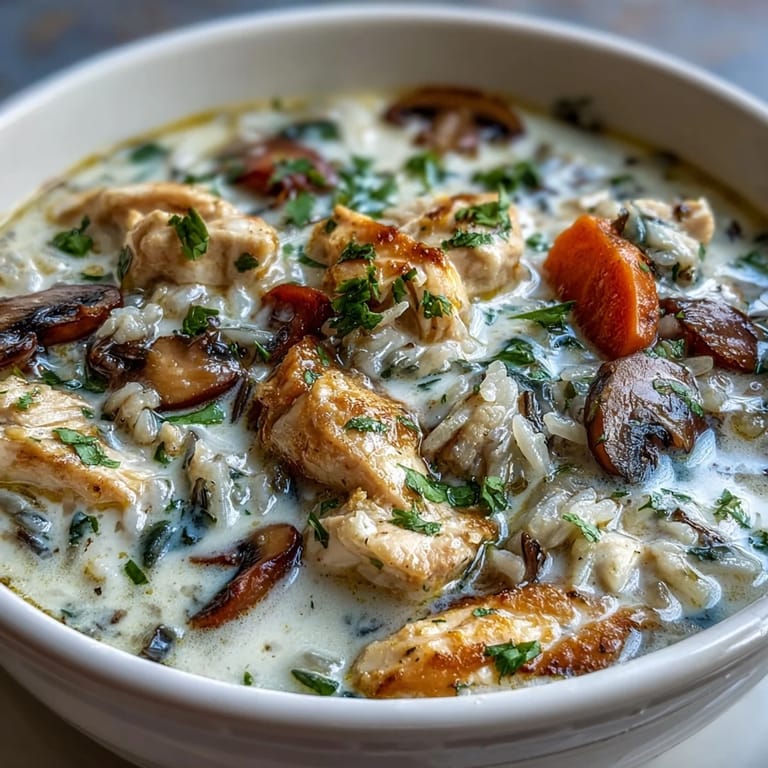
Save There's something about the smell of mushrooms hitting hot butter that makes a kitchen feel like home, even if you're just learning to cook. I stumbled onto this soup on a gray afternoon when I had chicken breasts that needed using and a container of wild rice sitting in the pantry. What started as a practical decision turned into something I now make whenever someone needs comfort on a plate, the kind of dish that fills the house with warmth before anyone even tastes it.
I made this for my sister during her first week in a new apartment, when her kitchen was still mostly empty boxes and she was too tired to figure out takeout. Watching her face when she tasted it, that moment when comfort food actually does its job, reminded me why I bother learning to cook in the first place. She's made it three times since and keeps texting me questions about tweaking the seasoning.
Ingredients
- Boneless, skinless chicken breasts (about 400 g): Dicing them into bite-sized pieces means they cook evenly and distribute throughout the soup so every spoonful has protein.
- Freshly grated Parmesan cheese (1 cup, 100 g): Buy a wedge and grate it yourself because pre-shredded cheese won't melt as smoothly into the broth, and the flavor tastes fresher.
- Heavy cream (1/2 cup, 120 ml): This is what keeps the soup tasting luxurious without being cloyingly rich, and it mellows the saltiness of the cheese.
- Wild rice (3/4 cup, 140 g): Rinsing it first removes excess starch and prevents a gummy texture, something I learned the messy way before my first attempt.
- Olive oil and unsalted butter (2 tablespoons and 1 tablespoon): Using both gives you the fruity notes of oil plus the depth that only butter brings to sautéed vegetables.
- Yellow onion, carrots, celery, and garlic: This aromatic base is what builds the soup's backbone before anything else goes in, and chopping them slightly smaller means faster cooking.
- Cremini or white mushrooms (300 g, 10 oz): Slice them roughly the same thickness so they cook evenly, and don't skip browning them properly because that's where the umami magic happens.
- Fresh thyme and bay leaf: Thyme pairs with mushrooms and chicken like they were made for each other, while the bay leaf adds a subtle floral note that ties everything together.
- Low-sodium chicken broth (1.5 liters, 6 cups): Low-sodium lets you control the salt yourself, which matters when cream and Parmesan are already contributing savory depth.
- Salt and freshly ground black pepper: Grinding pepper fresh means you taste its brightness instead of dusty flatness, and you'll want to taste and adjust as you go.
- Fresh parsley for garnish: This isn't just decoration, it adds a fresh, almost peppery note that cuts through the richness and reminds your palate what vegetables taste like.
Tired of Takeout? 🥡
Get 10 meals you can make faster than delivery arrives. Seriously.
One email. No spam. Unsubscribe anytime.
Instructions
- Warm your base:
- Heat the olive oil and butter together in a large pot over medium heat until the butter's foaming and smells a little nutty. Add the diced onion, carrots, and celery, stirring occasionally until they start softening and the onion turns translucent, about 5 minutes, because you're building flavor layers here.
- Coax the mushrooms:
- Add the sliced mushrooms and minced garlic, cooking for 6 to 8 minutes while they release their moisture and begin to caramelize at the edges. You'll know they're ready when most of the liquid has evaporated and they smell deeply earthy and almost sweet.
- Combine the main players:
- Stir in the diced chicken, wild rice, fresh thyme, and bay leaf along with salt and pepper, letting them toast together in the hot pot for 2 to 3 minutes. This step seems small but it wakes up the flavors before they hit the broth.
- Let it simmer low and slow:
- Pour in the chicken broth and bring everything to a boil, then immediately lower the heat, cover the pot, and let it bubble gently for 40 to 45 minutes until the wild rice is tender and the chicken is cooked through. The covered pot keeps everything moist and infuses the rice with all those savory flavors.
- Finish with richness:
- Remove the bay leaf, then stir in the heavy cream and freshly grated Parmesan, letting it simmer uncovered for 5 minutes so the cheese melts completely and the soup becomes silky. Taste and adjust the salt and pepper because the dairy and cheese have added their own saltiness.
- Serve with intention:
- Ladle the soup into bowls and top with fresh parsley and a small handful of extra Parmesan if you're feeling generous. The warm broth will steam slightly as you serve it, so warn people to blow on their spoons.
 Save
Save 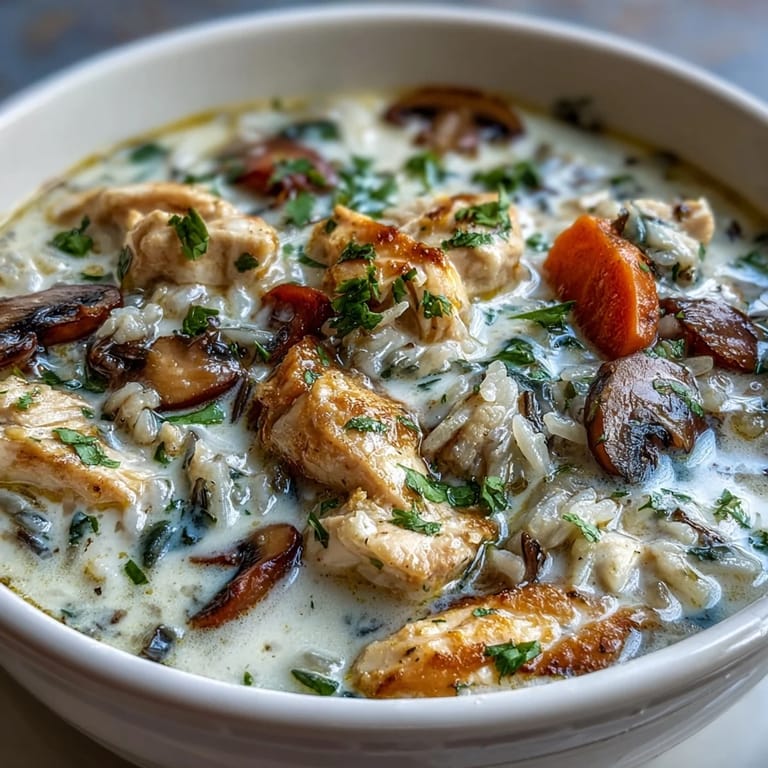 Save
Save My neighbor brought over a bowl of this soup while I was recovering from a cold, and I remember sitting on my couch realizing that sometimes the most important thing a dish can do is show up when you need it. Food like this doesn't have to be complicated to change someone's day.
Why Wild Rice Matters Here
Wild rice has this chewy, almost nutty texture that regular white rice can't replicate, and it holds its shape as it simmers instead of turning mushy and disappearing into the broth. When it's cooked through, it gives the soup structure and substance, making each spoonful feel intentional rather than just liquid with scattered ingredients. I've tried shortcuts with regular rice and the soup tastes fine but feels less like something that took care and thought.
Building Flavor Without Rushing
The difference between a soup that tastes home-cooked and one that tastes like you threw things together is usually time and attention to how ingredients transform. When you sauté your aromatics slowly, when you let the mushrooms brown instead of steam, when you let the wild rice gradually absorb the broth, you're giving flavors a chance to develop and deepen. This isn't a recipe that rewards rushing, but it does reward patience in the most delicious way.
Variations and Moments of Flexibility
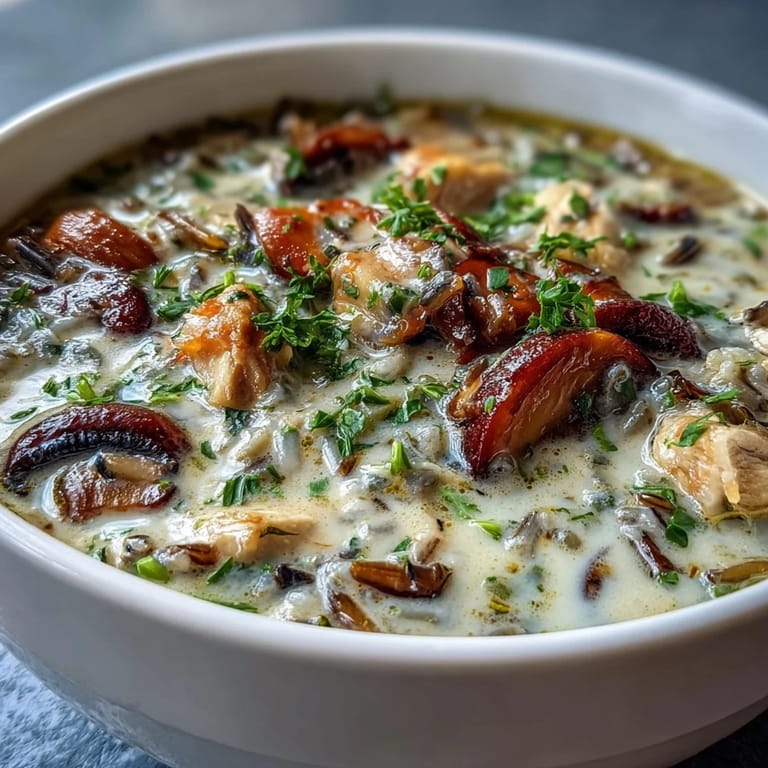
The beauty of this soup is that it's forgiving enough for improvisation but structured enough to taste intentional. I've made it vegetarian by swapping in extra mushrooms and white beans when friends came over, and I've used rotisserie chicken on nights when I needed shortcuts. On cold mornings, I've added an extra splash of cream because I wanted it thicker, and on lighter evenings, I've thinned it with more broth because I wanted something that felt less substantial.
- If you want it heartier, stir in some white beans or pearl barley alongside the wild rice for more texture and protein.
- For a faster version, substitute rotisserie chicken and add it at the very end so you skip the cooking time entirely.
- A small drizzle of truffle oil or a pinch of nutmeg at the end transforms this into something restaurant-worthy when you want to impress someone.
 Save
Save 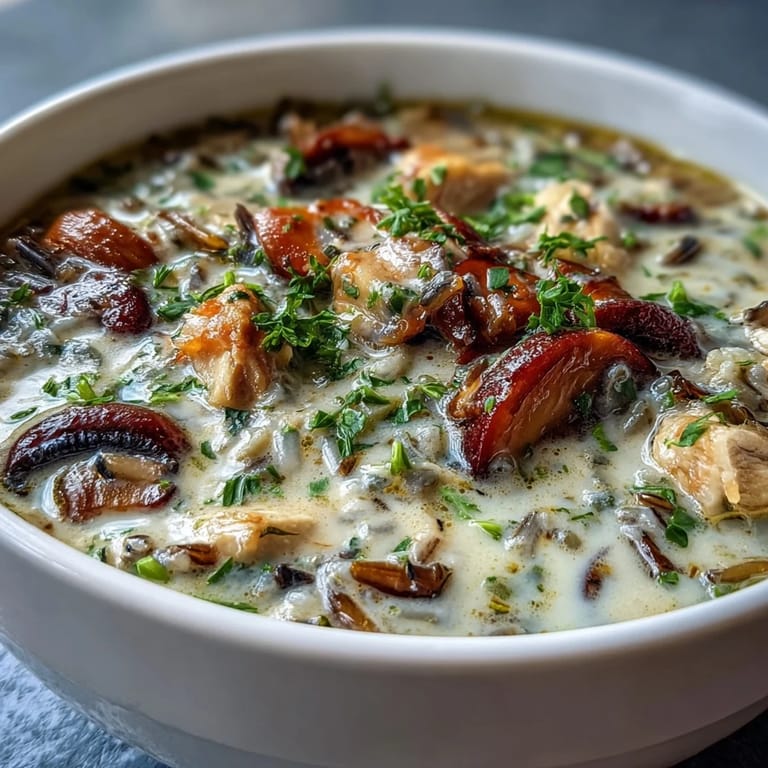 Save
Save This soup has become the thing I make when I want to feel like I'm taking care of people, and there's something quietly powerful about that. Serve it with crusty bread and maybe a crisp white wine, and watch people slow down and actually taste what's in front of them.
Questions & Answers
- → Can I use brown rice instead of wild rice?
Yes, you can substitute brown rice, but reduce the cooking time to about 30-35 minutes as brown rice cooks faster than wild rice. White rice can also be used with a cooking time of 18-20 minutes.
- → How do I store and reheat leftovers?
Store in an airtight container in the refrigerator for up to 4 days. Reheat gently on the stovetop over medium-low heat, adding a splash of broth or cream if the soup has thickened. Microwave individual portions for 2-3 minutes, stirring halfway through.
- → Can I freeze this soup?
Yes, this soup freezes well for up to 3 months. Cool completely before transferring to freezer-safe containers. Note that the rice may absorb more liquid upon thawing, so add extra broth when reheating to restore desired consistency.
- → What can I use instead of heavy cream?
Half-and-half or whole milk can replace heavy cream for a lighter version, though the soup will be less rich. For dairy-free options, use coconut cream or cashew cream. You can also skip the cream entirely and add extra Parmesan for creaminess.
- → How can I make this soup thicker?
For a thicker consistency, mash some of the cooked vegetables against the pot with a wooden spoon, or blend 1-2 cups of the soup and stir it back in. Alternatively, mix 2 tablespoons of cornstarch with cold water and stir into the simmering soup.
- → Can I add other vegetables to this soup?
Absolutely! Spinach, kale, or Swiss chard can be stirred in during the last 5 minutes of cooking. Diced potatoes, parsnips, or butternut squash also work well—add them with the carrots in step 1 for proper cooking time.