 Save
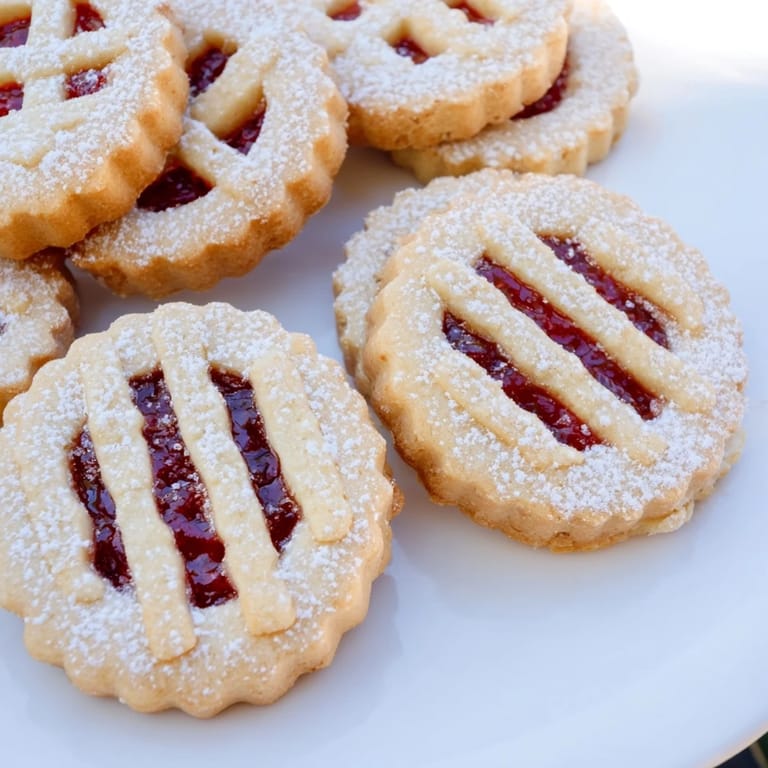
Save There's something about Austrian linzer cookies that stopped me in my tracks the first time I saw them in a Vienna café window—those delicate, jewel-like sandwiches catching the afternoon light with their lattice cutouts and jewel-bright jam gleaming through. I came home determined to master them, and what started as an ambitious afternoon turned into a year of fine-tuning the butter-to-almond ratio until the dough was practically velvety under my rolling pin. The real magic, I discovered, isn't in complicated technique but in those small decisions: using real lemon zest instead of extract, taking time to properly chill the dough, and respecting the precision of those tiny cutout windows. Now whenever I make a batch, the whole kitchen smells like a Alpine Christmas market, and I understand why these cookies have been beloved across European tea tables for centuries.
I'll never forget watching my grandmother's face light up when I brought a tin of these to her house last winter—she picked one up carefully, as if it might break, then bit into it with this look of quiet recognition, like she was tasting her own childhood again. That moment made me realize these cookies aren't really about impressing people; they're about creating something that makes someone feel seen and remembered.
Ingredients
- All-purpose flour (2 cups/250 g): The foundation of the structure; I measure by weight whenever possible to avoid the dense, tough cookies that come from scooping and leveling.
- Almond flour (1 cup/100 g): Buy blanched and finely ground if you can—this is the difference between cookies that taste like cake and ones that melt like butter on your tongue.
- Ground cinnamon (1/2 teaspoon): Just enough to whisper spice without overwhelming the delicate almond flavor.
- Salt (1/4 teaspoon): This tiny amount somehow makes the almond and butter sing.
- Unsalted butter (3/4 cup/170 g), softened: Room temperature is non-negotiable; cold butter won't cream properly and you'll end up with dry, crumbly dough.
- Powdered sugar (2/3 cup/80 g): This creates that tender crumb structure; granulated sugar would make them spread too much.
- Egg yolk (1 large): The yolk alone keeps things rich and delicate while the white would add unnecessary structure.
- Pure vanilla extract (1 teaspoon): Worth buying the real stuff; imitation can taste slightly metallic alongside the almond.
- Lemon zest (1/2 teaspoon grated): Freshly grated, never the jarred kind—it brightens the whole flavor profile with just a whisper.
- Seedless raspberry jam (3/4 cup/225 g): Quality matters here since it's a starring ingredient; look for jam that's mostly fruit and has a good set so it doesn't ooze everywhere.
- Powdered sugar for dusting (1/4 cup/30 g): This final dusting catches the light and makes the cookies look as beautiful as they taste.
Tired of Takeout? 🥡
Get 10 meals you can make faster than delivery arrives. Seriously.
One email. No spam. Unsubscribe anytime.
Instructions
- Mix the dry team:
- In a medium bowl, whisk together flour, almond flour, cinnamon, and salt—this distributes the spice evenly so you don't get unexpected bursts of cinnamon in some bites.
- Cream butter and sugar:
- Beat softened butter and powdered sugar until it looks light, fluffy, and pale; this takes about 3-4 minutes and is worth the time because trapped air bubbles make the finished cookies tender.
- Bring in the wet ingredients:
- Add egg yolk, vanilla, and lemon zest, beating until everything looks like a single creamy mixture with no streaks of butter visible.
- Bring it together gently:
- Add the dry ingredients gradually, mixing just until you can't see flour streaks anymore; overmixing develops gluten and you'll end up with tough cookies instead of tender ones.
- Chill the dough:
- Divide dough in half, flatten each into a disk, wrap in plastic, and chill for at least an hour—cold dough is forgiving dough that won't spread all over the baking sheet or resist your cookie cutters.
- Prepare to bake:
- Preheat your oven to 350°F (175°C) and line two baking sheets with parchment paper so the cookies bake evenly without browning on the bottom.
- Roll with intention:
- On a lightly floured surface, roll one disk to 1/8 inch thickness—thin enough to be delicate, thick enough to hold that jam without falling apart.
- Cut the bottoms:
- Using a 2-inch cookie cutter, cut out cookies and place half of them on your prepared baking sheets; these will be your solid bases that hold the jam.
- Make the tops:
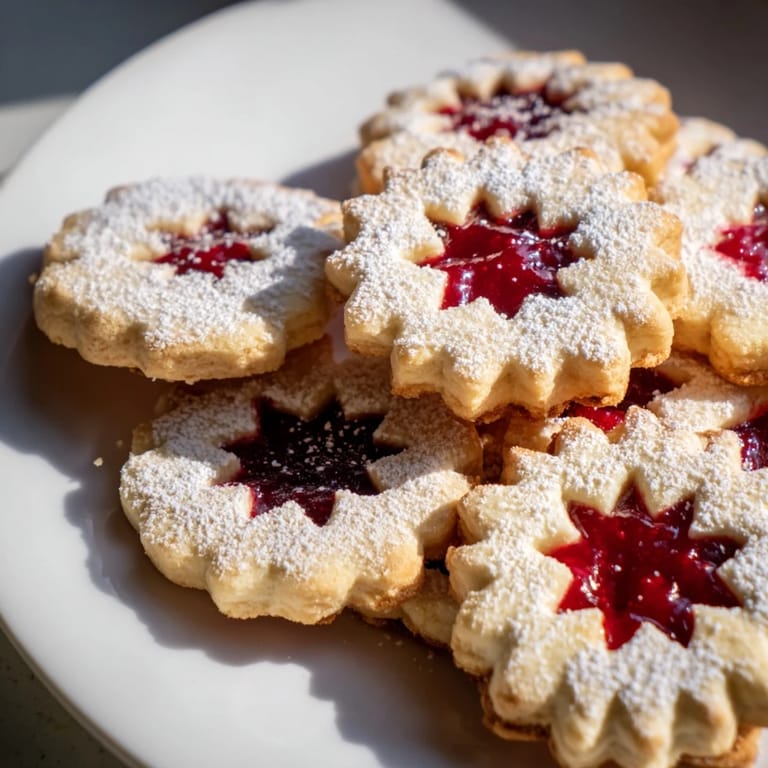
- With the remaining dough, cut out the same size circles, then use a smaller 1-inch cutter to remove the centers, creating windows or lattice patterns; these decorative tops are what make the cookies special.
- Use every scrap:
- Re-roll any scraps gently and cut more cookies; there's no reason to waste this dough.
- Bake until golden:
- Bake for 10-12 minutes until the edges just turn lightly golden; the centers might look barely set, but they'll continue cooking as they cool on the pan.
- Cool with patience:
- Let cookies sit on the pan for 2 minutes so they set up enough to handle, then transfer to a wire rack where they'll fully crisp up as they cool.
- Dust the tops:
- Once completely cooled, dust those cutout cookie tops generously with powdered sugar so they look like delicate Austrian masterpieces.
- Assemble with care:
- Spread about 1 teaspoon of jam on the flat side of each solid bottom cookie, then press a sugared top onto it, jam-side down.
- Let them rest:
- Allow the finished cookies to rest for at least 30 minutes before serving so the jam sets and the sandwich stays intact when you bite into it.
 Save
Save I made these for a small dinner party once, and I watched everyone pause when they picked up a cookie—that moment where you notice the delicate cutout, the dusting of sugar catching the light, the glimpse of ruby jam underneath. Suddenly the whole table felt like a special occasion, like we'd all stepped into something more festive than an ordinary evening.
Why These Cookies Matter
Linzer cookies represent something in baking that I've come to value deeply: the idea that decoration can be functional, that something can be both beautiful and delicious without apology. They require attention and precision, but they reward you with something that feels genuinely special in a world of perfectly fine, unremarkable desserts. When you offer someone a linzer cookie, you're offering them a moment of care.
Variations and Flavor Swaps
After making these dozens of times, I've discovered the template is actually quite flexible. I've used apricot jam and found it slightly less sweet, giving a more elegant tea-time feel. Blackcurrant jam adds a sophisticated tartness that makes adults lean back and blink appreciatively. If you're avoiding nuts, simply replace the almond flour with more all-purpose flour, though you'll lose some of that distinctive tender crumb, so it's worth experimenting with a small batch first.
Storage and Keeping
These cookies actually improve slightly after a day or two as the flavors meld together and the jam softens the cookies just enough to make them less crispy and more tender. An airtight container keeps them fresh for up to 5 days, though honestly they rarely last that long in my house. I've found that keeping them in a single layer between parchment prevents sticking and makes them easier to grab when you want just one more cookie with your afternoon tea.
- A glass of dessert wine or hot tea is the only acceptable pairing for these cookies.
- Make them a day ahead so you're not stressed during the gathering—they actually taste better that way.
- Keep the powdered sugar dusting light if you're planning to pack them for travel, as it dusts off with movement.
 Save
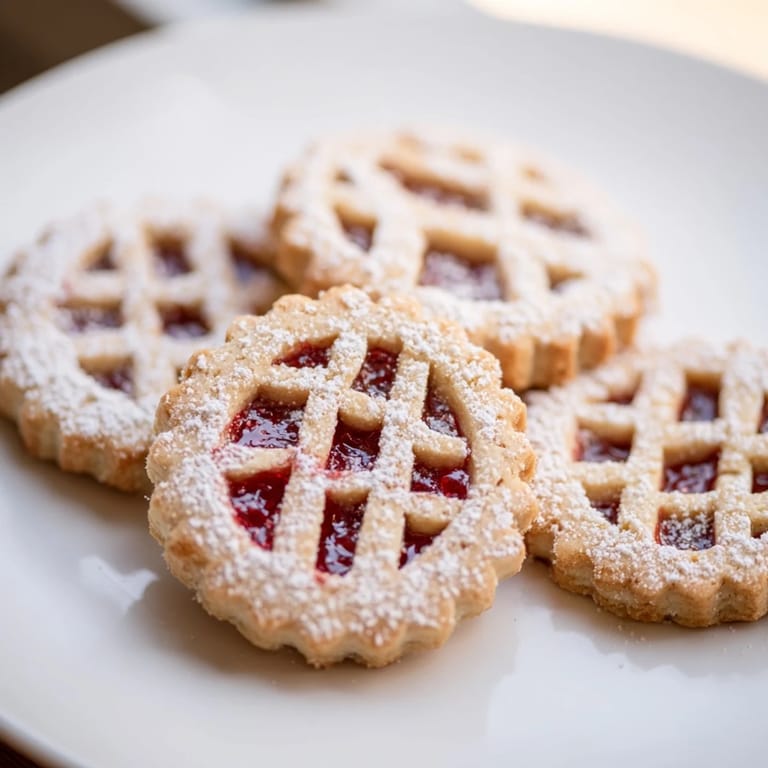
Save Making linzer cookies has become one of my favorite kitchen rituals, something I return to when I want to create something that feels both timeless and personal. There's quiet joy in that precision—in perfectly cut windows, that jewel-bright jam, that snow of powdered sugar—and in offering something beautiful to people you care about.
Questions & Answers
- → What type of flour is used in the dough?
The dough uses a combination of all-purpose flour and finely ground blanched almonds for tender texture and nutty flavor.
- → How do I achieve the lattice pattern on top?
Use a smaller cookie cutter to cut out centers from half the cookies, creating windows that form the delicate lattice once dusted with powdered sugar.
- → Can I substitute raspberry jam with other fillings?
Yes, apricot or blackcurrant preserves are great alternatives that complement the almond dough well.
- → Why is the dough chilled before baking?
Chilling firms the dough for easier rolling and clean cookie shapes, and helps maintain tenderness while baking.
- → How long should the cookies rest after assembling?
Allow the cookies to rest at least 30 minutes so the jam sets firmly and flavors meld before serving.